Kumano Kodo Pilgrimage
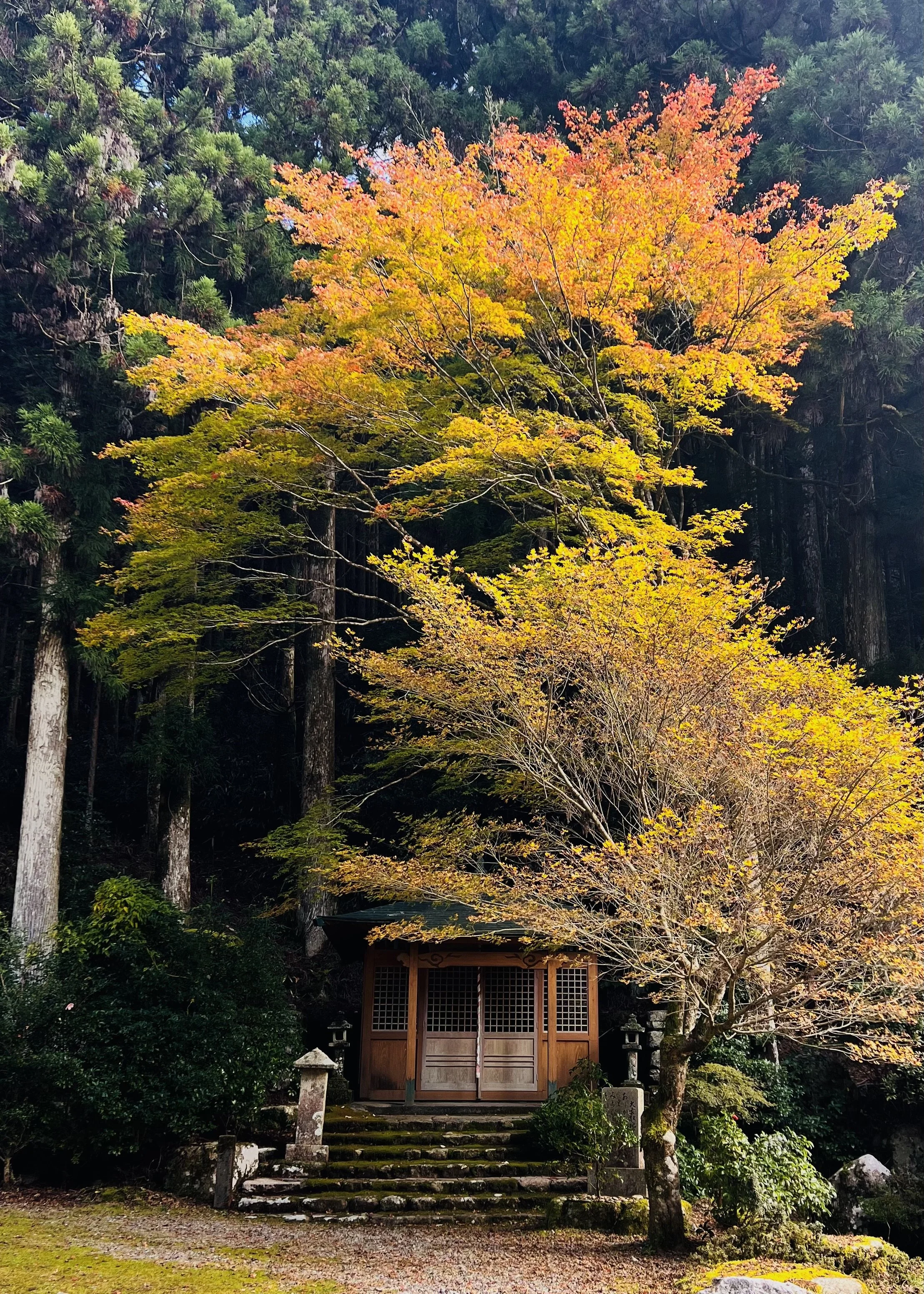
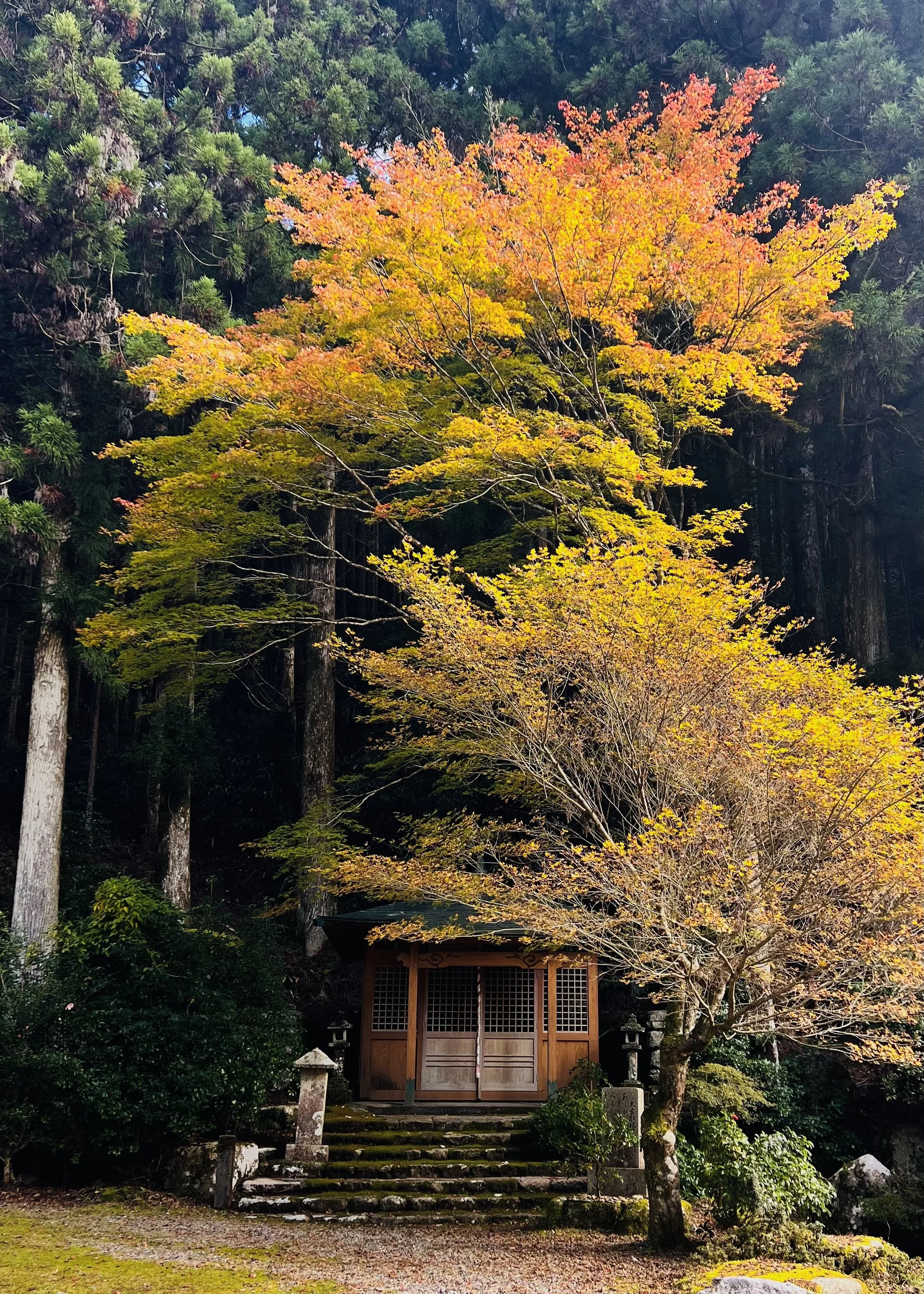
There is a particular clarity that comes with walking the Nakahechi Route in November. As the humid haze of the Japanese summer lifts, the ancient cedar forests of the Kumano Kodo are redefined by a sharper, more intentional light.
The Nakahechi Route
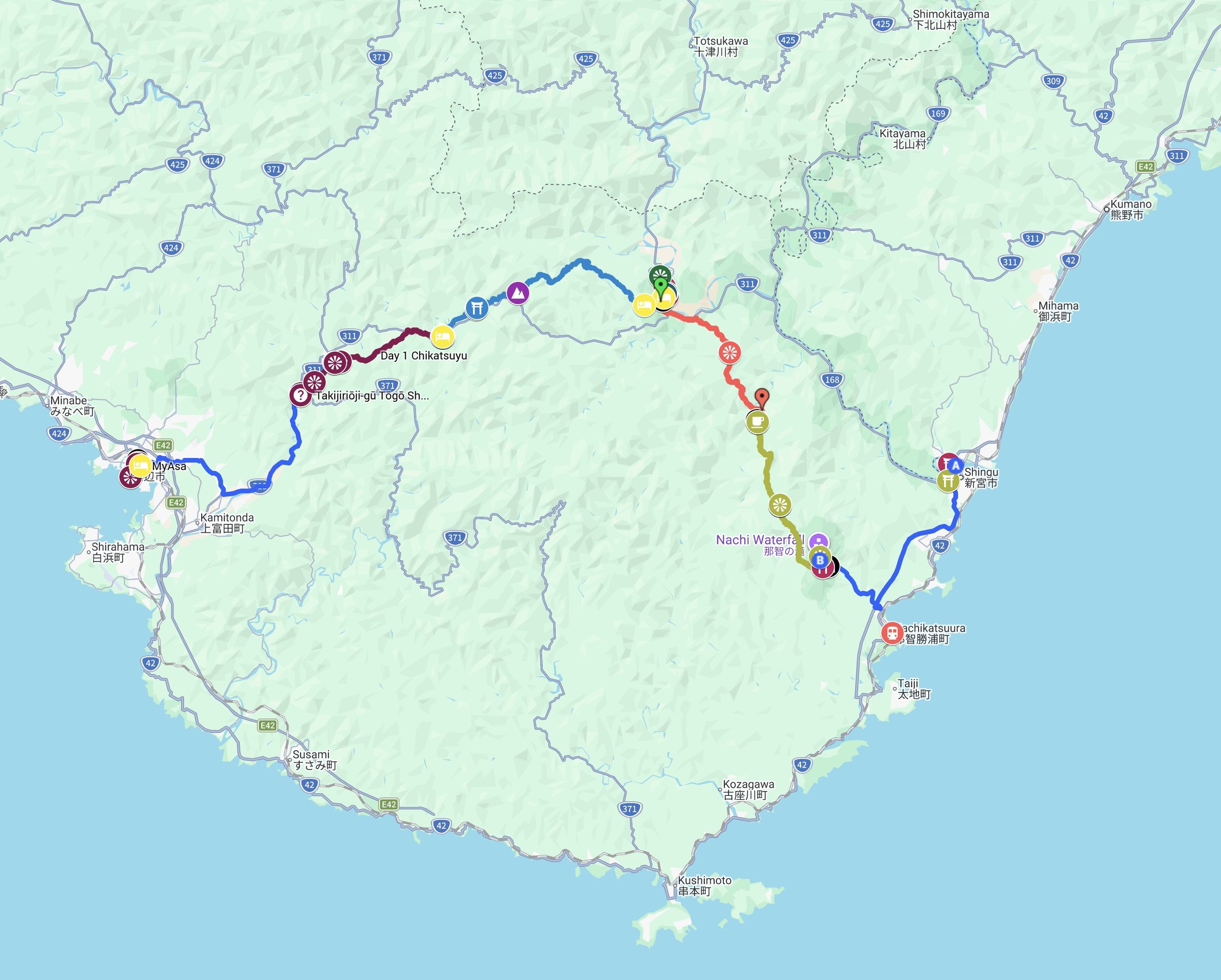
The route walked on this journey is the Nakahechi, the most celebrated and historically significant of all the Kumano Kodo trails. Known as the "Imperial Route," it has been walked by emperors, nobles, monks and ordinary pilgrims for over a thousand years, with the earliest records dating from the 10th century. The traditional pilgrimage once began in Kyoto, with great processions of the imperial court winding south through the mountains — so numerous and frequent that it was nicknamed the "pilgrimage of ants."
Today's pilgrims begin in Kii-Tanabe and follow the same ancient path deep into the heart of the Kii Mountains, crossing four key mountain passes — the Takahara-goe, Waraji-toge, Kogumotori-goe and Ogumotori-goe — descending into mist-filled valleys, passing through isolated hamlets, and arriving at the sacred Kumano Sanzan — the three grand shrines of Kumano. In 2004 the Kumano Kodo was designated a UNESCO World Heritage Site, one of only two pilgrimage routes in the world to hold this status alongside Spain's Camino de Santiago. The Nakahechi is the most accessible and best-signposted of all the routes, with trail markers in both Japanese and English throughout, making it well suited to self-guided trekking.

Day 0 — Osaka to Kii-Tanabe
City to Country
Arriving the day before the trail begins is strongly recommended — and for good reason. The first bus to Takijiri-oji departs early, and having a full evening in Tanabe allows you to stock up on supplies, sort your gear, and settle in without the pressure of an early morning arrival from Osaka.
The journey from Osaka to Kii-Tanabe Station by JR train takes around 2.5 hours south along the coast, the landscape gradually shifting from city to coastline to forested hills as the Kii Peninsula draws you in. Tanabe itself is a relaxed seaside town with the beach just a short walk from the station — a pleasant place to spend an evening before the mountains begin. The Comfort Hotel Kii-Tanabe makes an excellent base for the night — conveniently located near the bus station with a grocery store nearby, ideal for picking up snacks, water and any last-minute trail supplies for the days ahead.
The Tanabe Tourist Information Center, located just across from the station, is also worth a visit on arrival — staff speak English and can provide detailed trail maps, bus timetables, and advice on the route ahead. A worthwhile stop before the pilgrimage begins.
DAY 1 - Takijiri-oji to Chikatsuyu
17 km | 976m elevation gain
For an early morning fuel-up before the first bus, MyAsa is the standout option — a rice ball shop and cafe open from 4:00am for coffee and from 5:30am for fresh onigiri, located near Kii-Tanabe Station and ideal for pilgrims catching the early bus to Takijiri-oji.
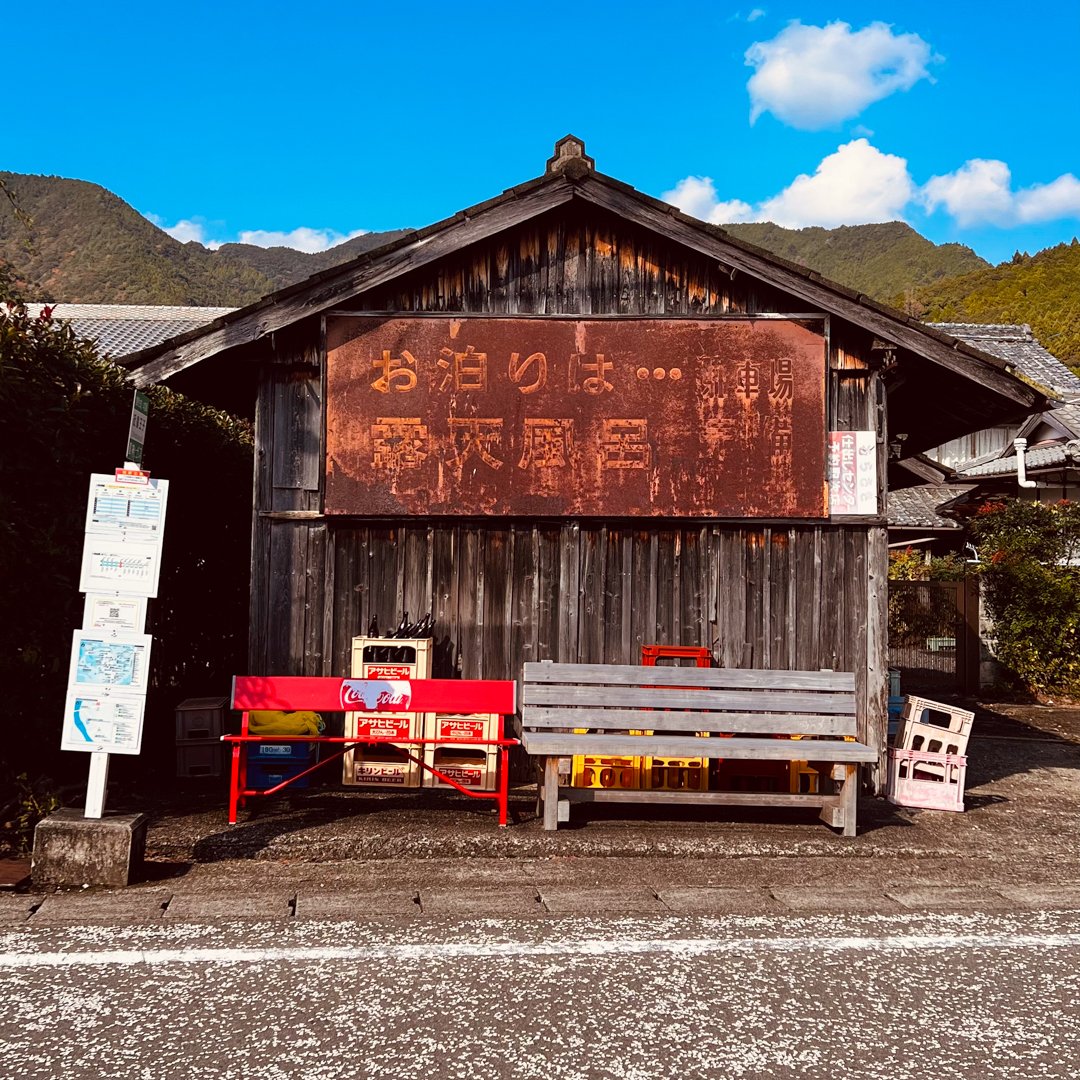
It is worth arriving at the bus stop at least 30 minutes before departure as the first bus to Takijiri-oji can attract a queue of fellow pilgrims. Bus tickets could not be easier — simply buy them as you board, with a ticket seller on hand to assist. No advance booking needed. And should you need a warm drink at any point, Japan's legendary vending machine culture has you covered throughout the journey — hot cappuccino is available from machines virtually everywhere, a small but welcome comfort on a cool November morning.
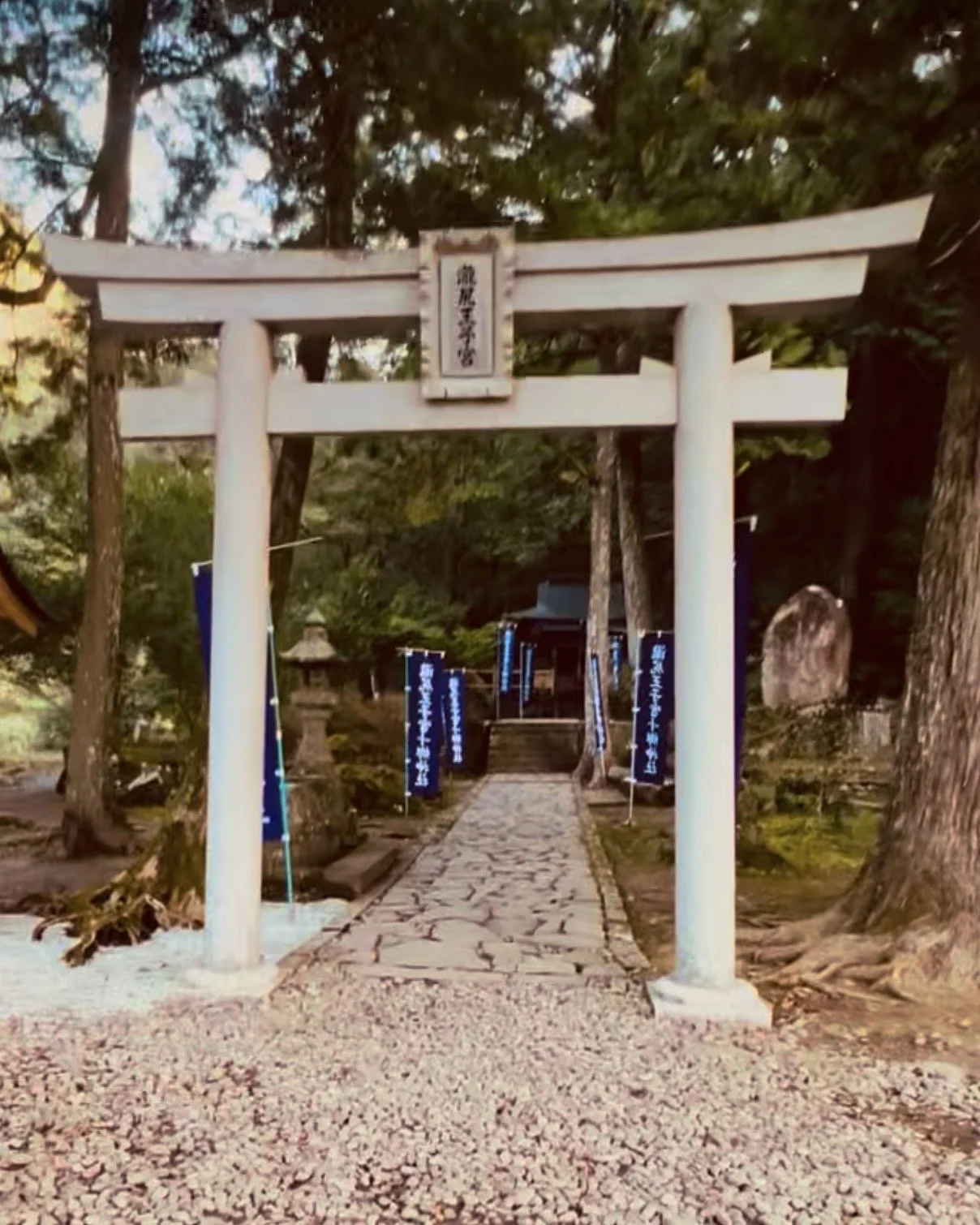
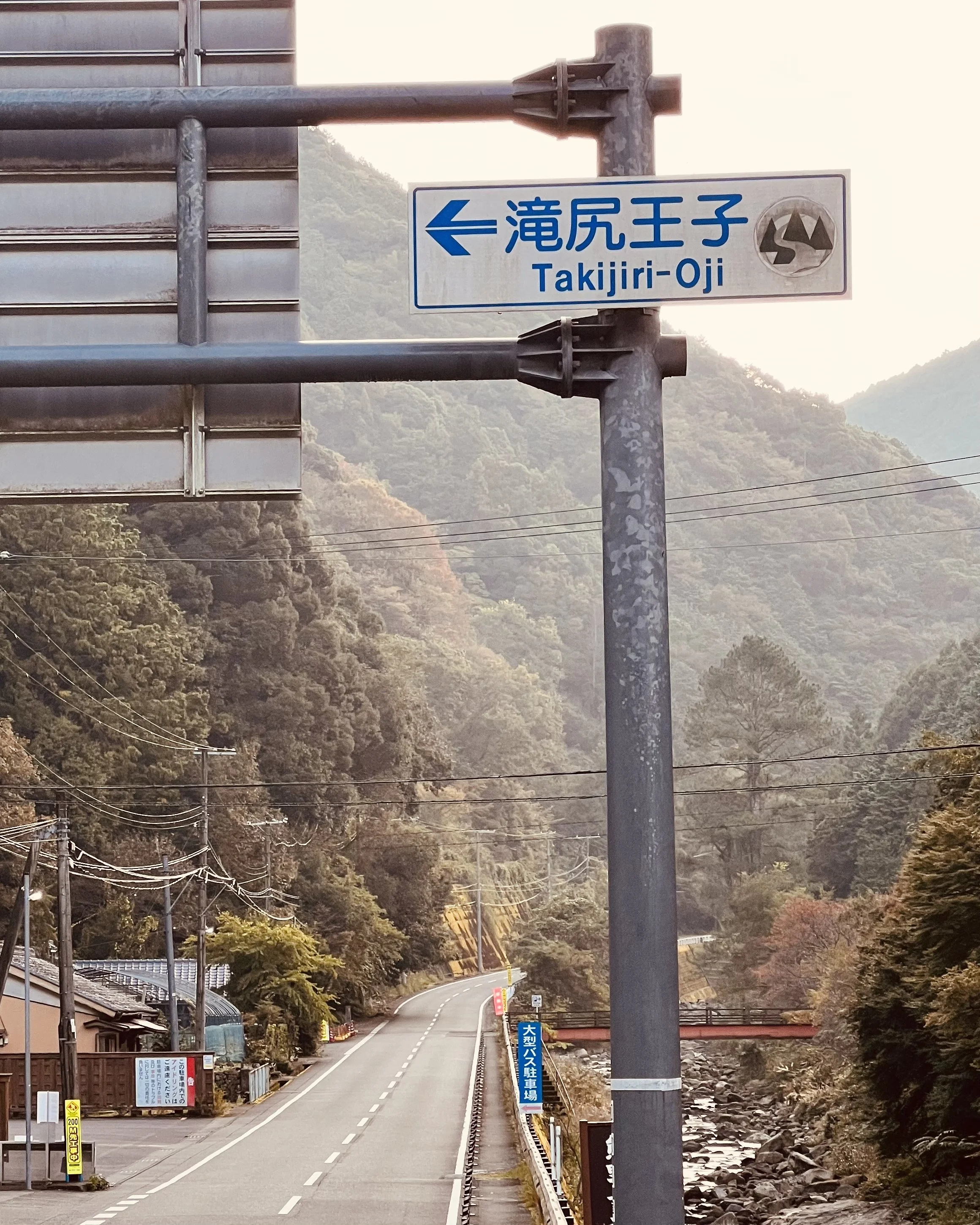
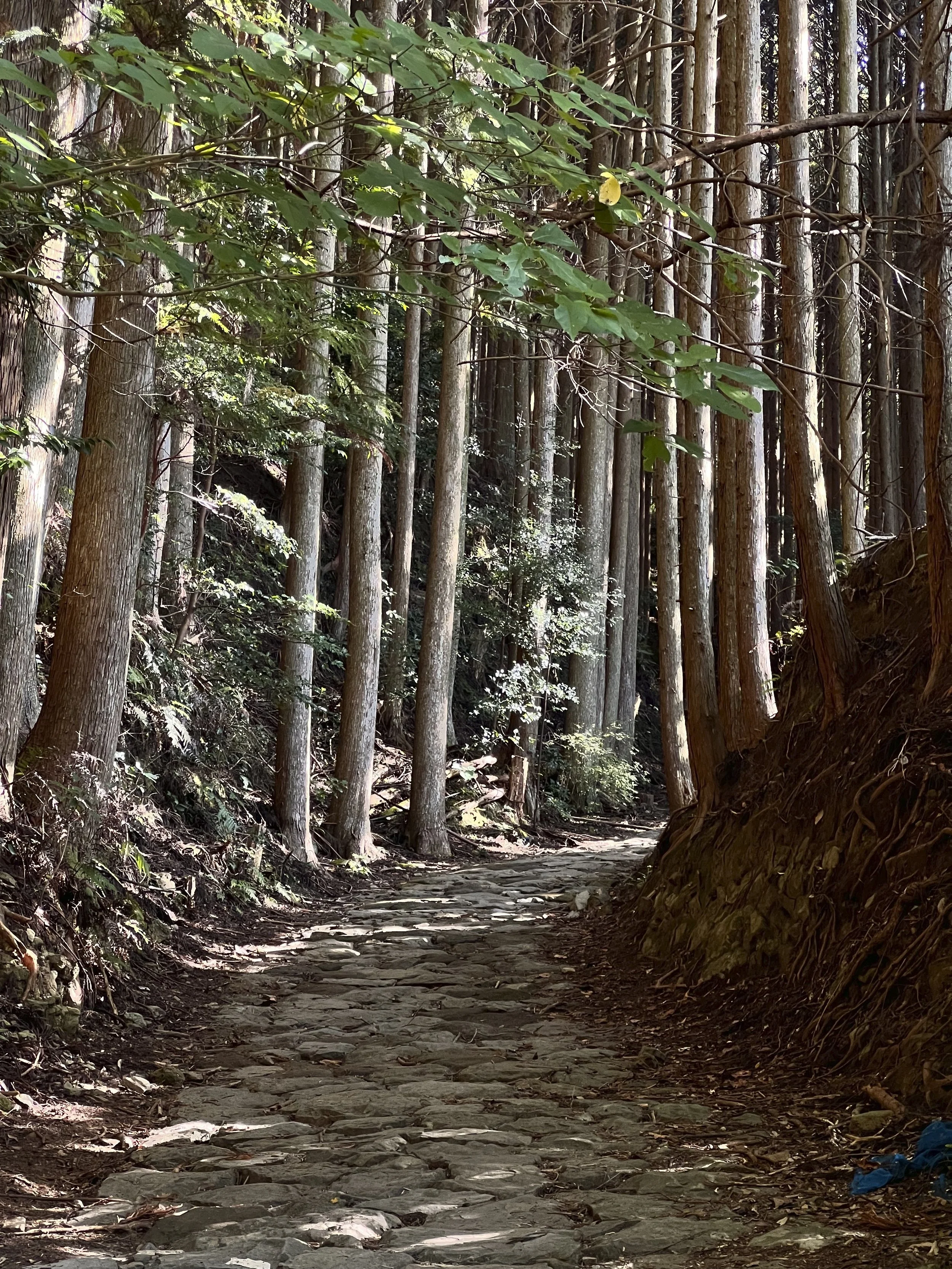
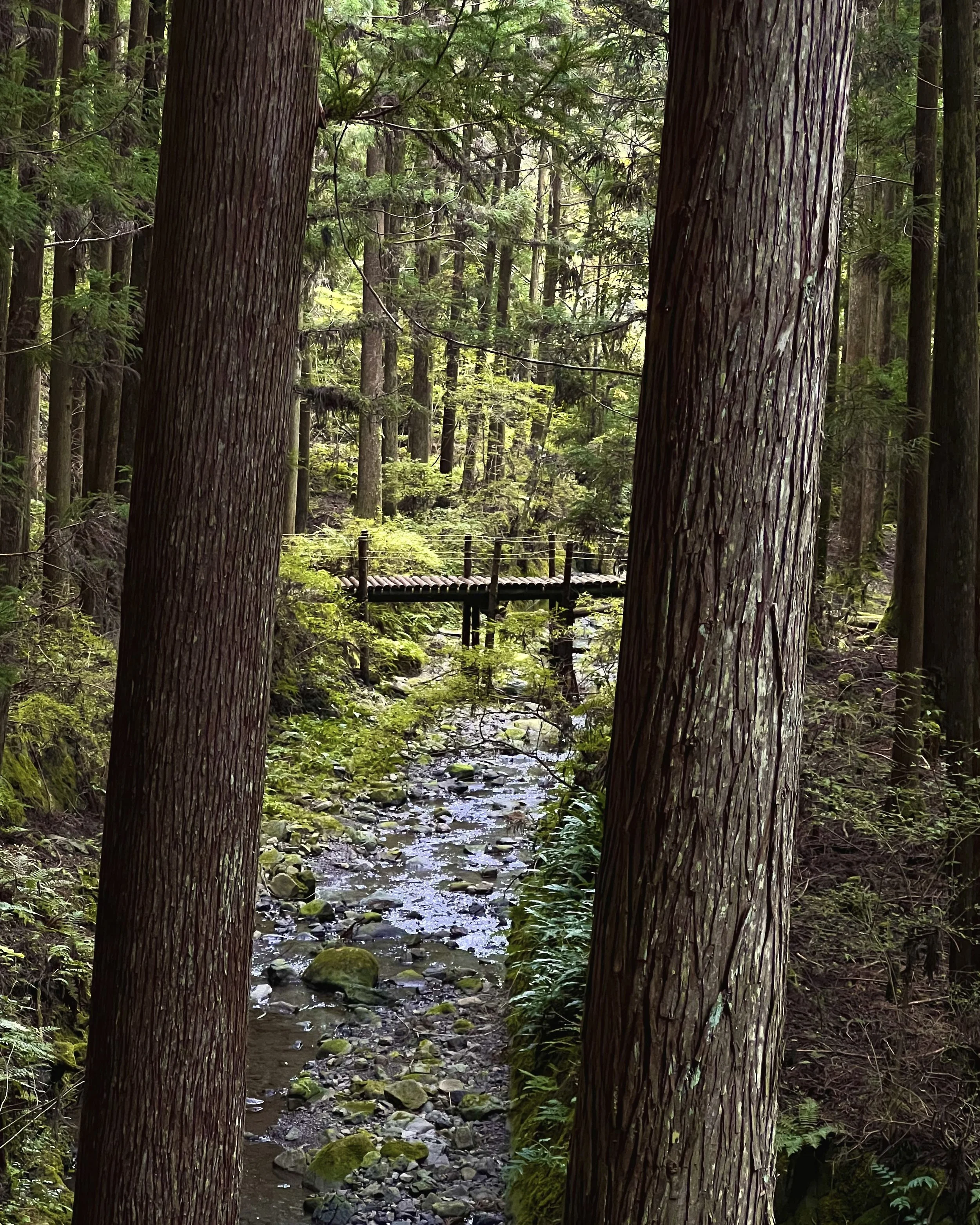
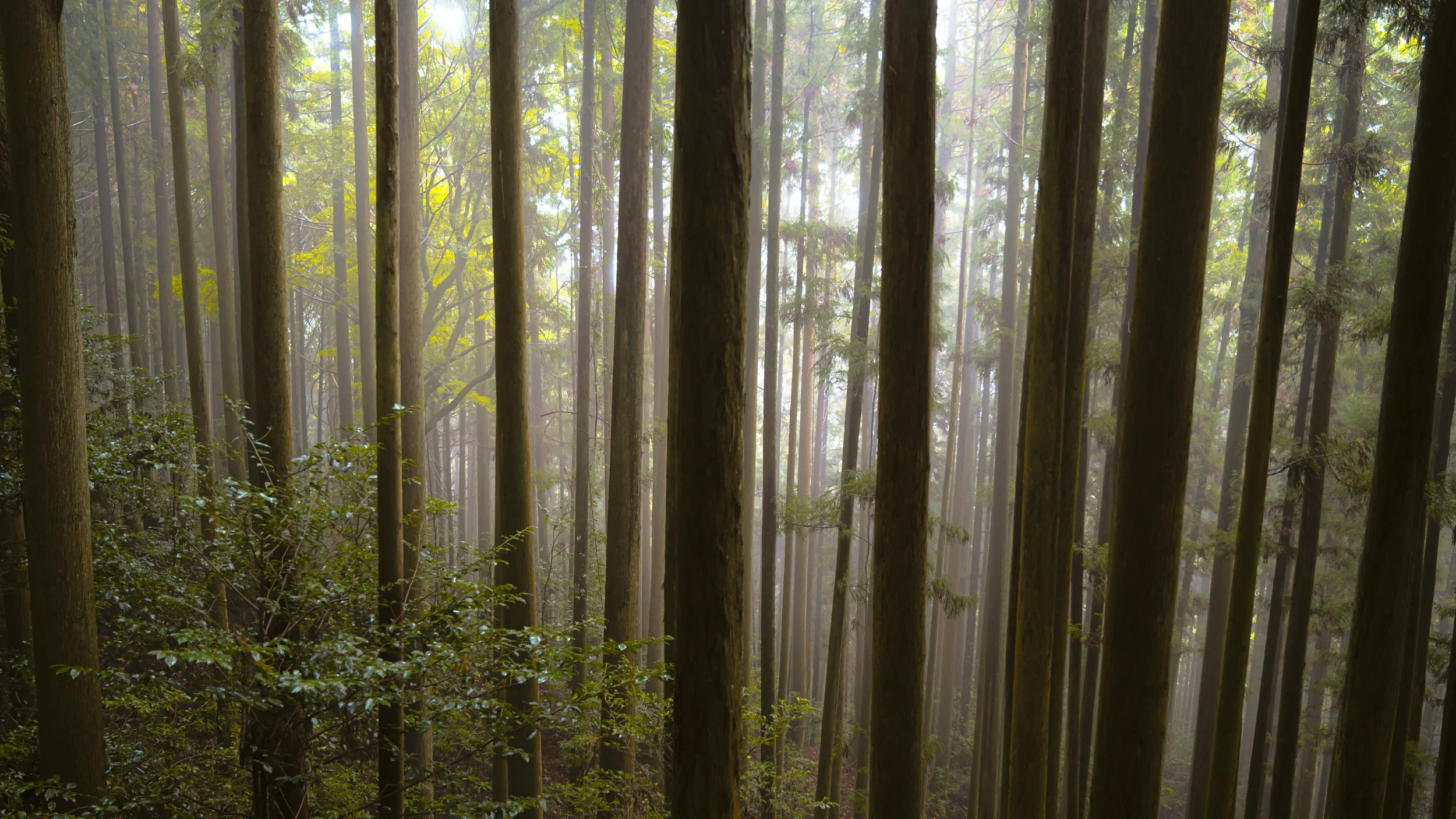
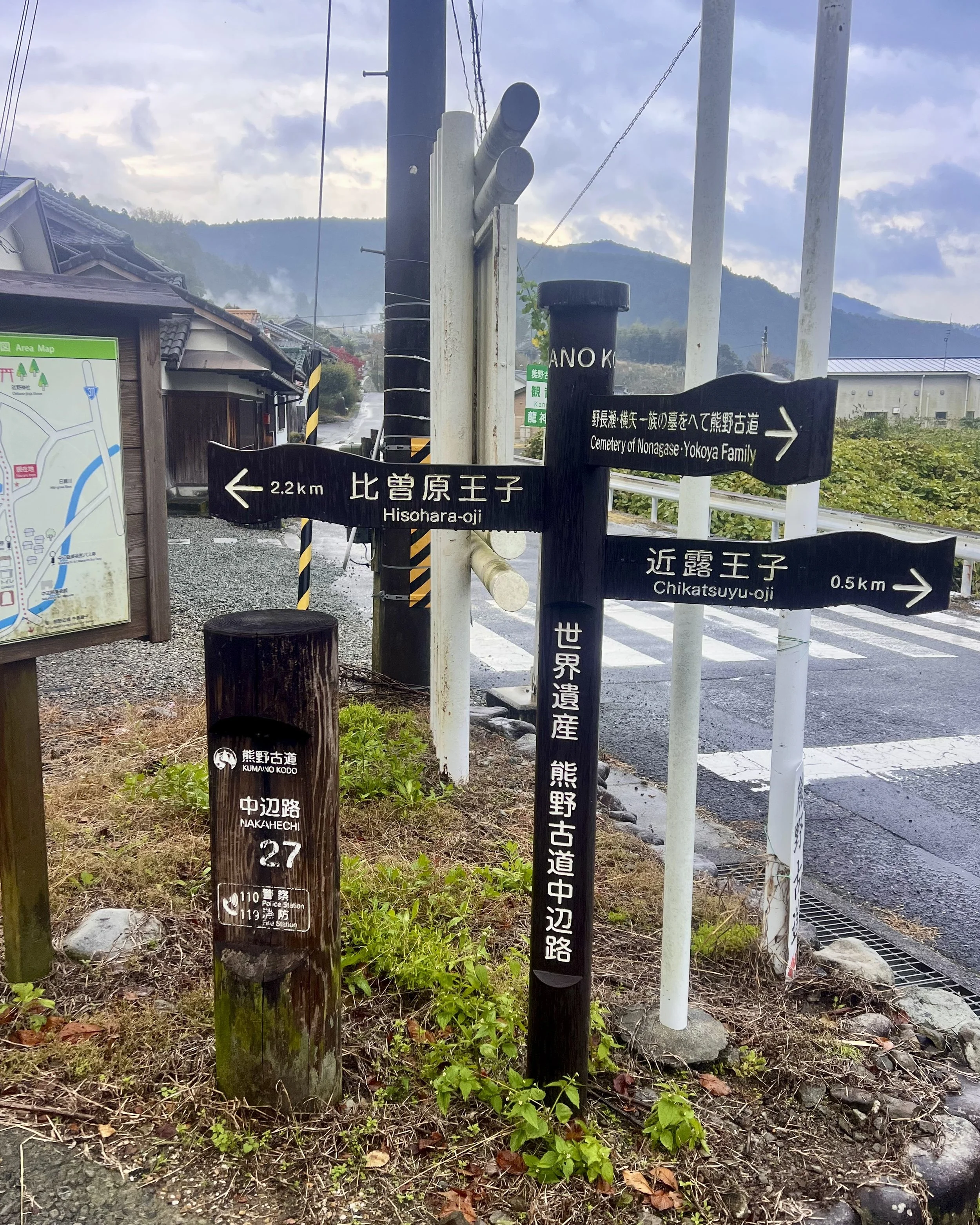
From Kii-Tanabe Station, a 40-minute local bus delivered you to Takijiri-oji, a small shrine marking the traditional starting point of the Nakahechi Route and the gateway into the sacred mountain portion of the pilgrimage. It is here that the ancient path leaves the secular world behind. From the bus drop-off the trail launches uphill through ancient cedar forest, crossing the Takahara-goe pass and climbing to the ridgeline settlement of Takahara with its sweeping panoramic views, before descending and winding through moss-covered stone paths and rural hamlets to arrive at Chikatsuyu.
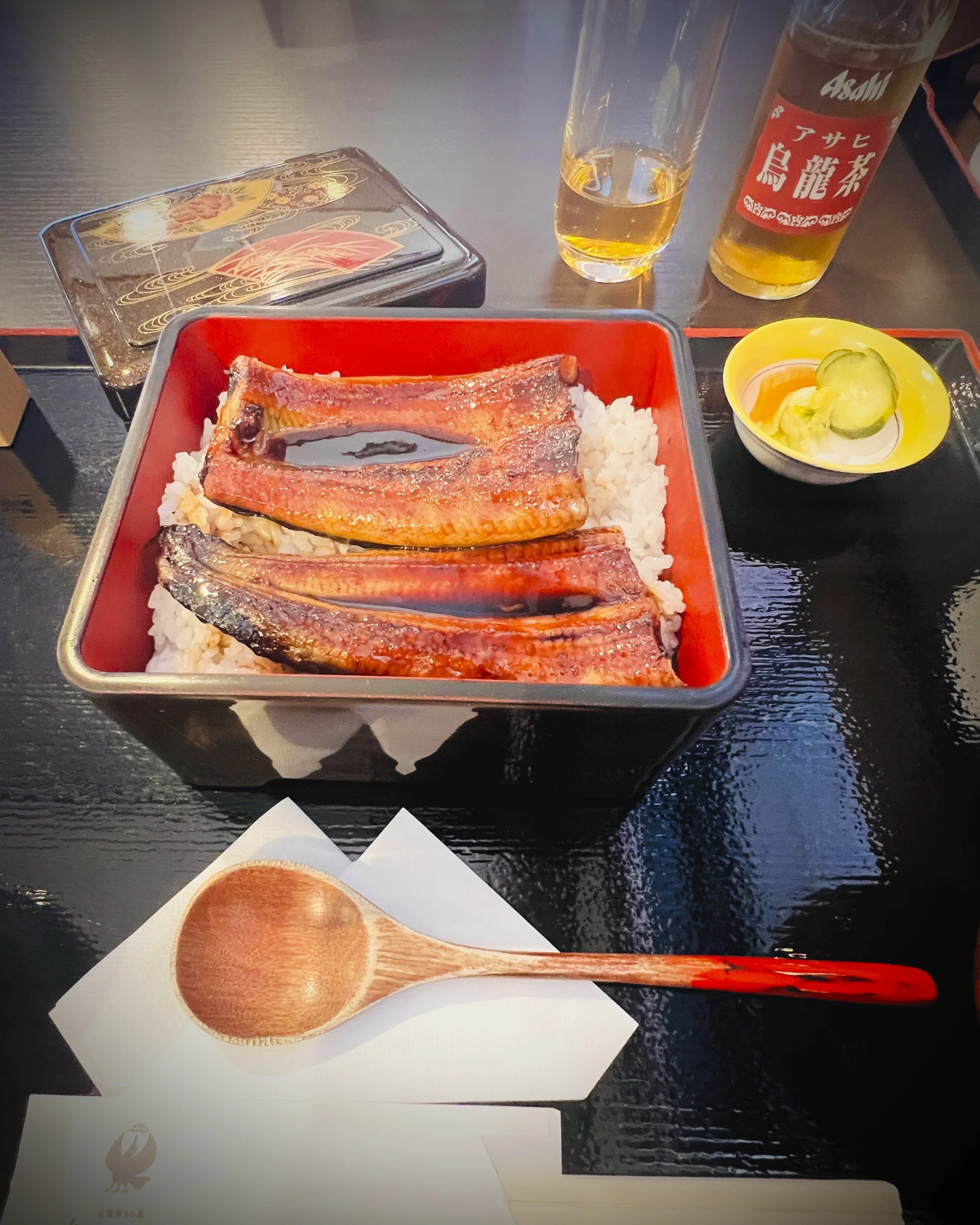
Chikatsuyu is a small, quiet village of around 450 people sitting at the base of the mountain trail alongside the Hidaka-gawa River, and one of the ancient post stations along the Kumano Kodo. During the peak years of the imperial pilgrimages, it was far more populous than it is today — and its name carries a poetic origin: a common tale says the area was named by a boy emperor who snapped a reed while travelling nearby and asked if the liquid dripping from it was "blood or dew" — chi ka tsuyu. The nearby restaurant is well known for serving ayu sweetfish, caught fresh from the Hiki-gawa River, in season from June to December — making November the very tail end of the season and a special treat for late-autumn pilgrims.
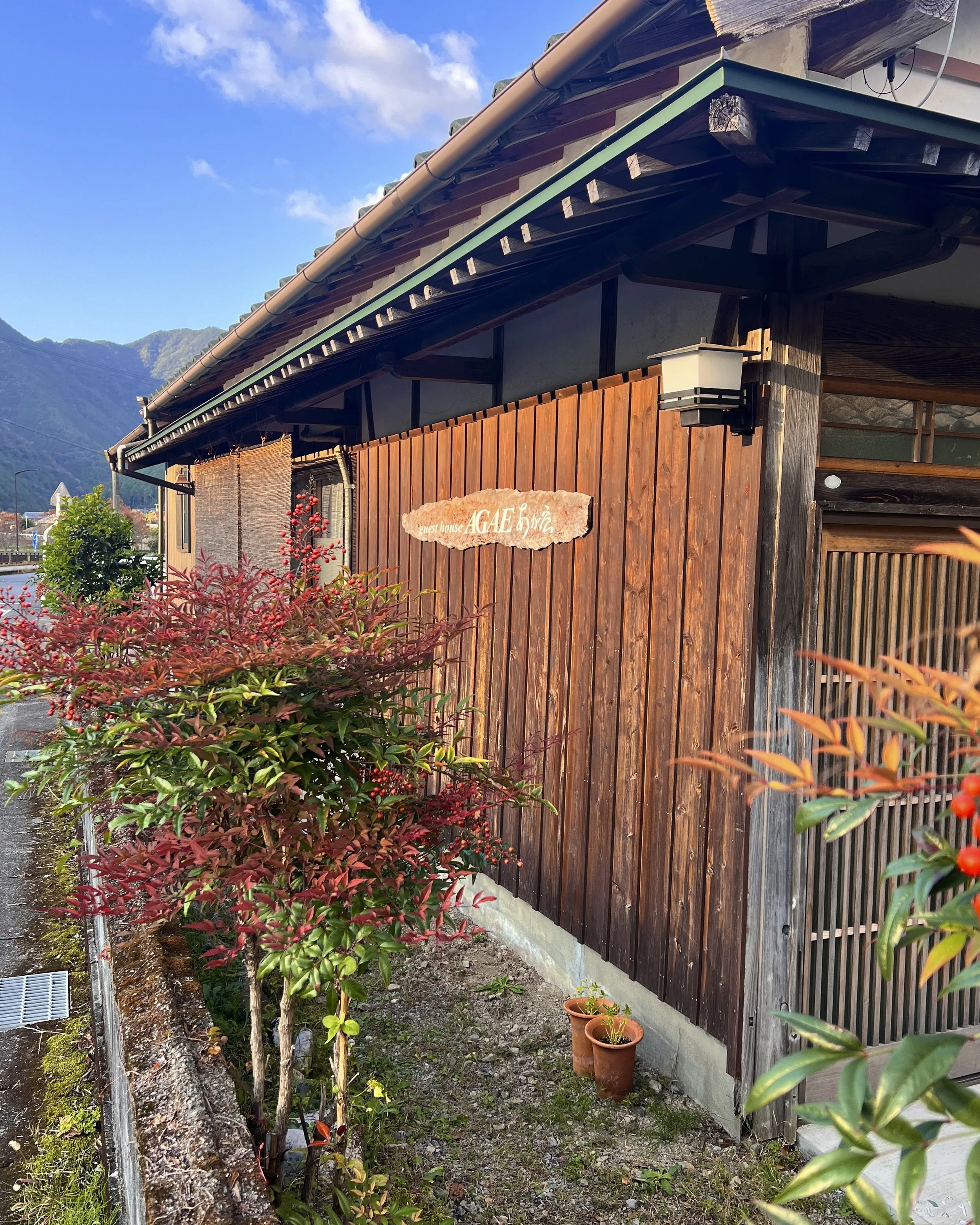
The day ended with the warmth of Guest House Agae — a beautifully self-renovated traditional Japanese farmhouse run by a Kumano Kodo guide, right in the heart of the hamlet.

Day 2 — Chikatsuyu to Kumano Hongu Taisha
37.8 km | 1,566m elevation gain | via Tsugizakura-oji and Hosshinmon-oji
Eight hours of hiking
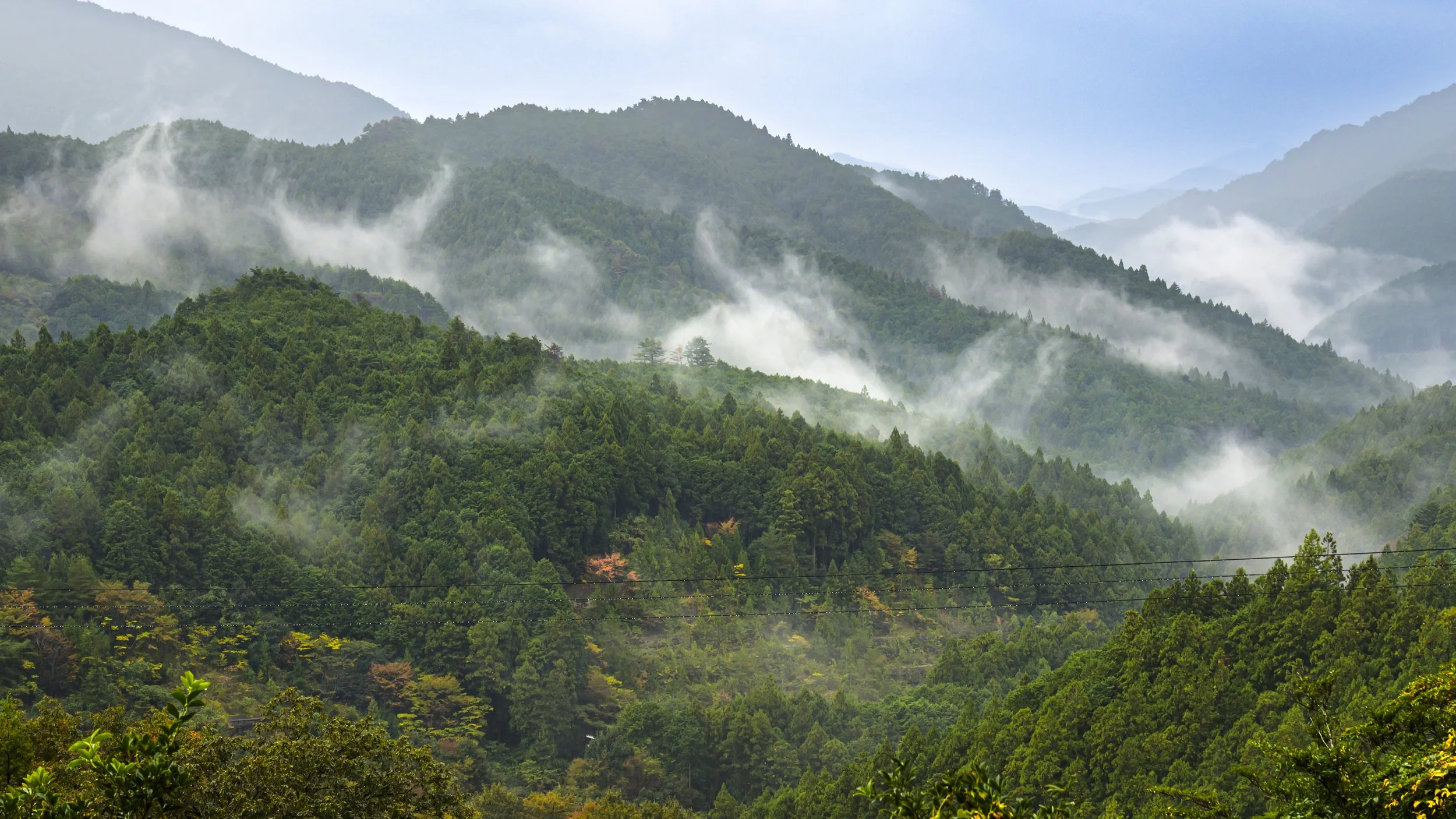
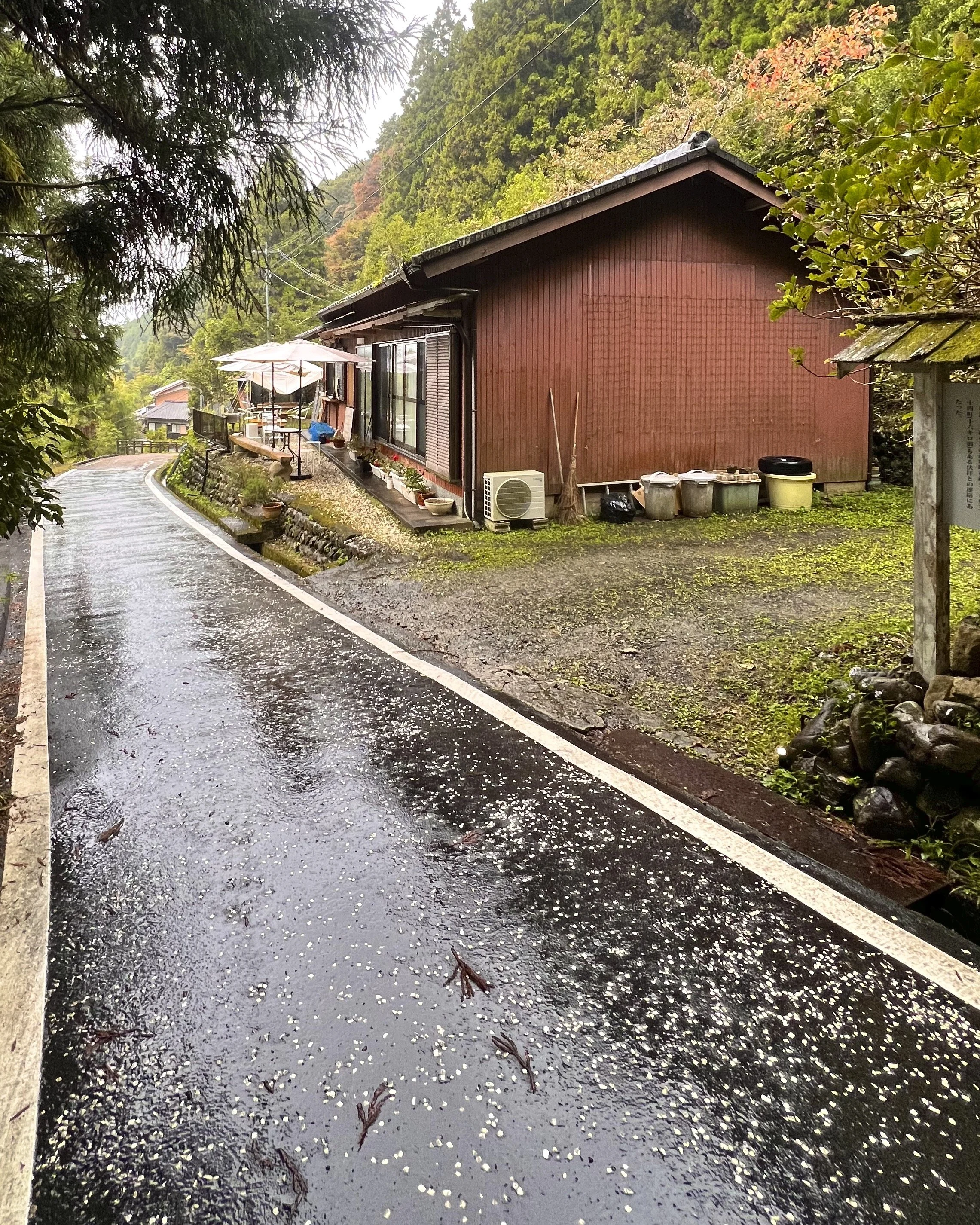
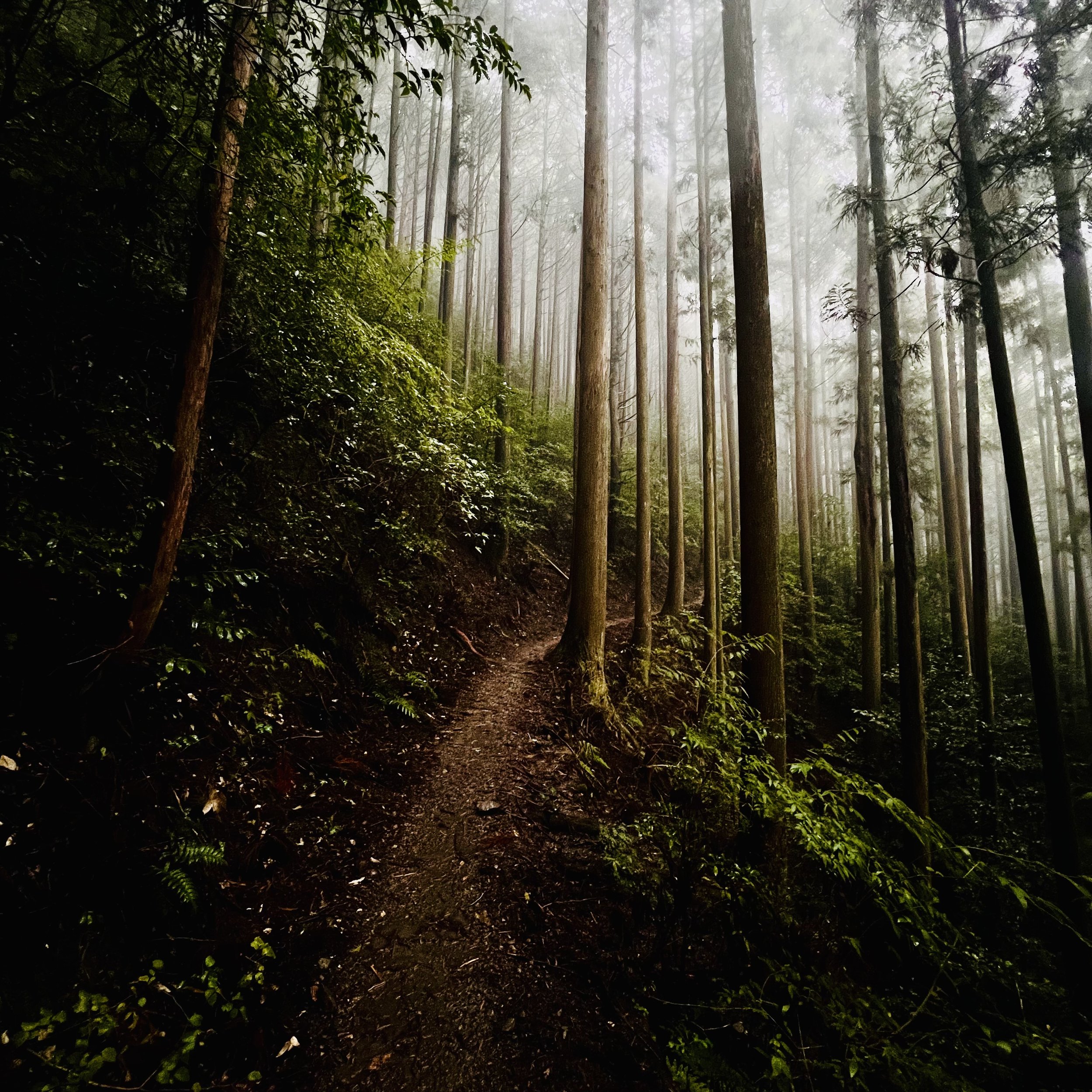
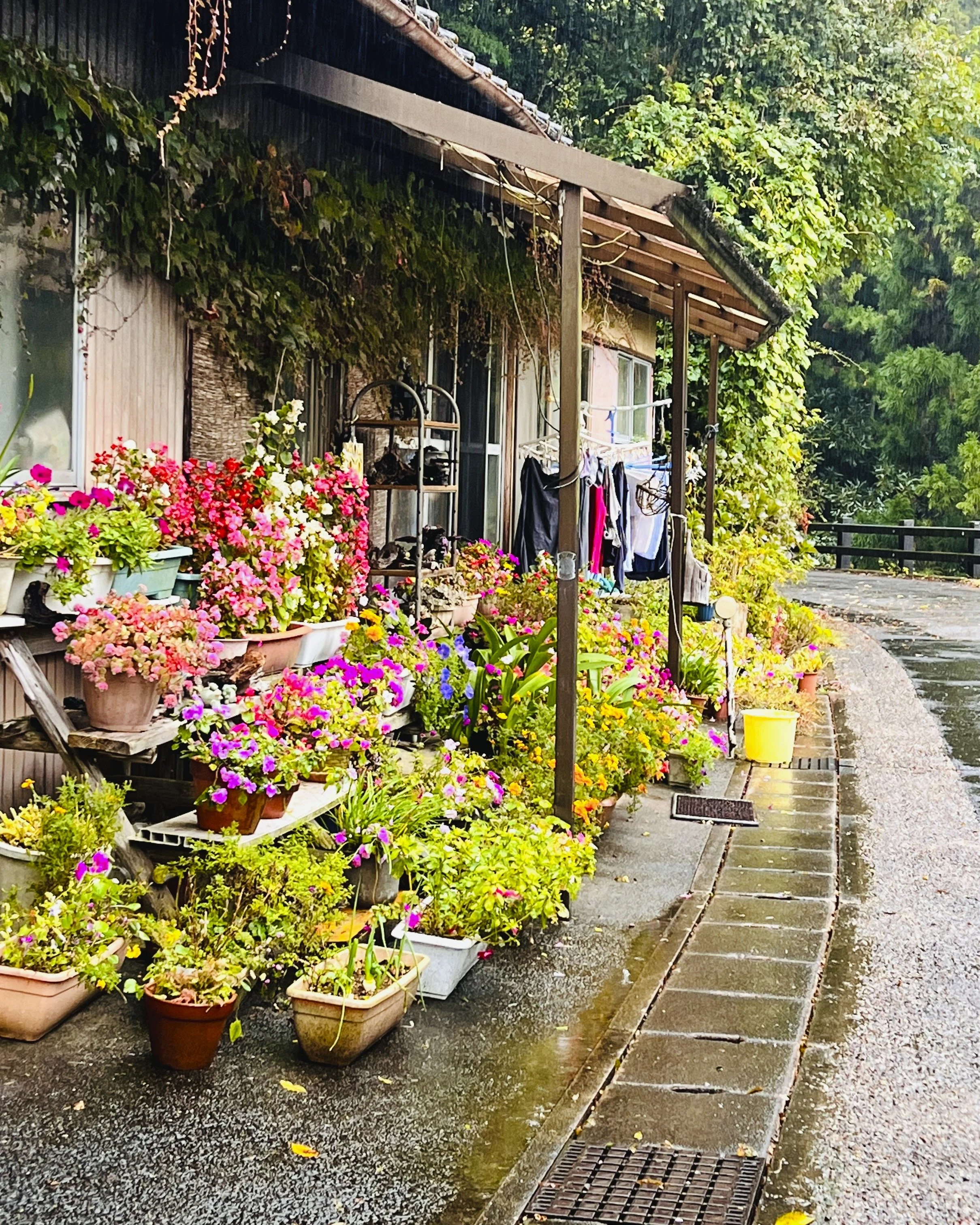
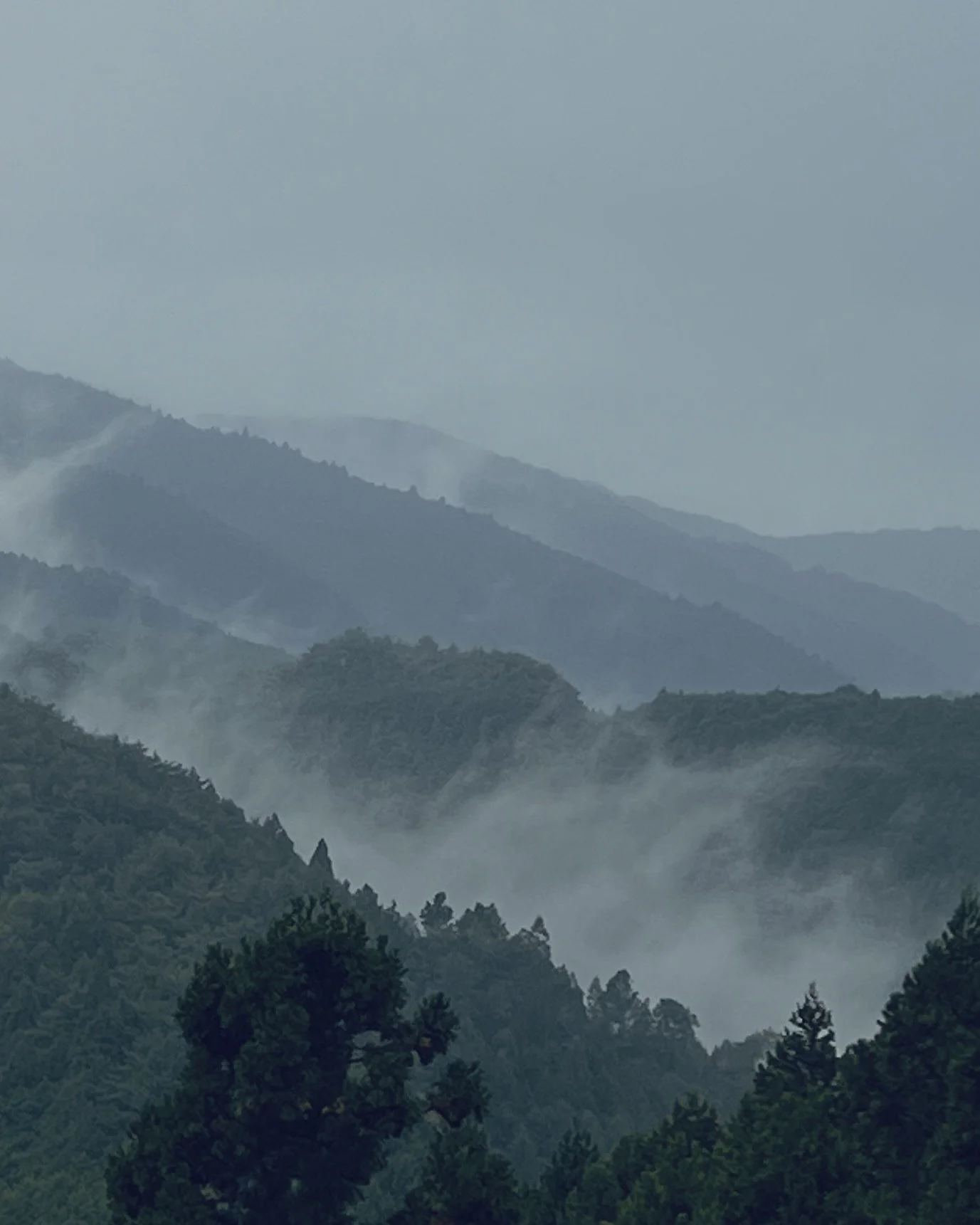
in eight hours of rain. The Kii Peninsula is one of the wettest regions in Japan, where the mountains wring moisture from Pacific weather systems year-round — and this day delivered that in full. The ancient cedar forest dripped, the stone paths were slick underfoot, and the valley mists sat thick across the trail from start to finish.
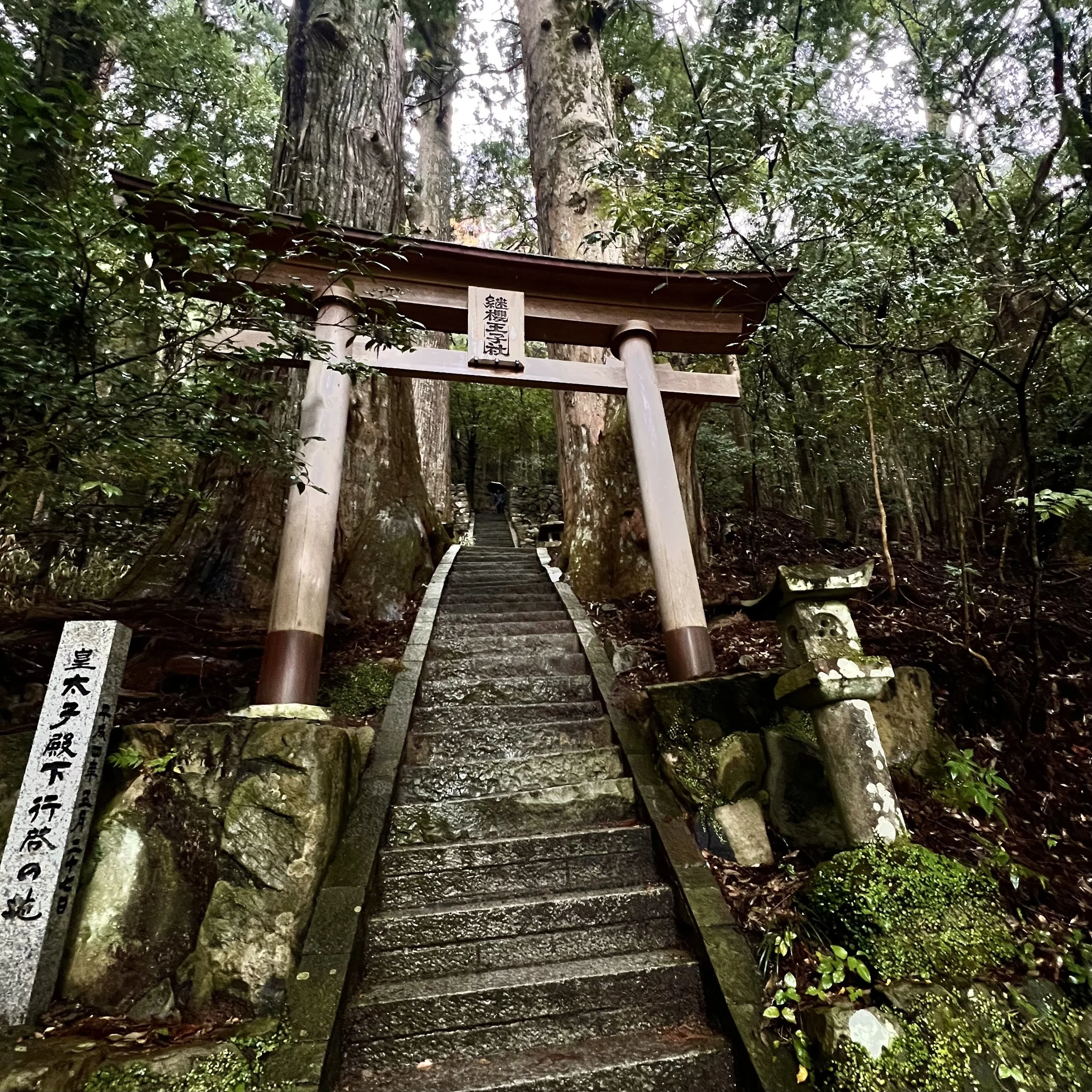
The trail climbed steadily through sodden forest to Tsugizakura-oji, its towering ancient cedar trees even more atmospheric in the rain. Right beside the shrine, a welcome sight: the Old Trail Guesthouse and Restaurant, a Franco-Japanese establishment run by French-speaking owners, serving freshly baked croissants to weary pilgrims — a wonderfully unexpected taste of France deep in the sacred mountains of Wakayama. Hot coffee and fresh croissants — hard to overstate the appeal at that point in the day.
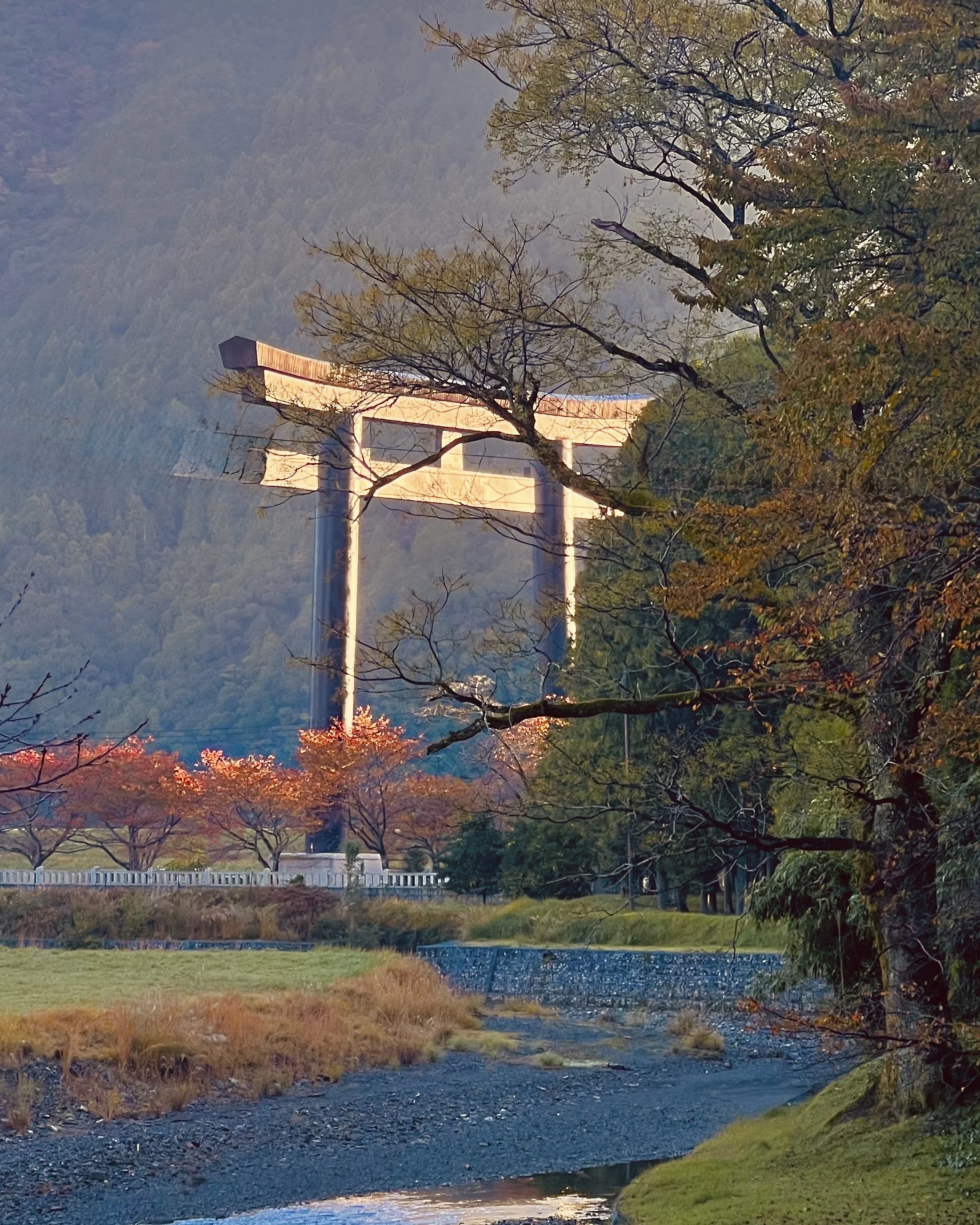
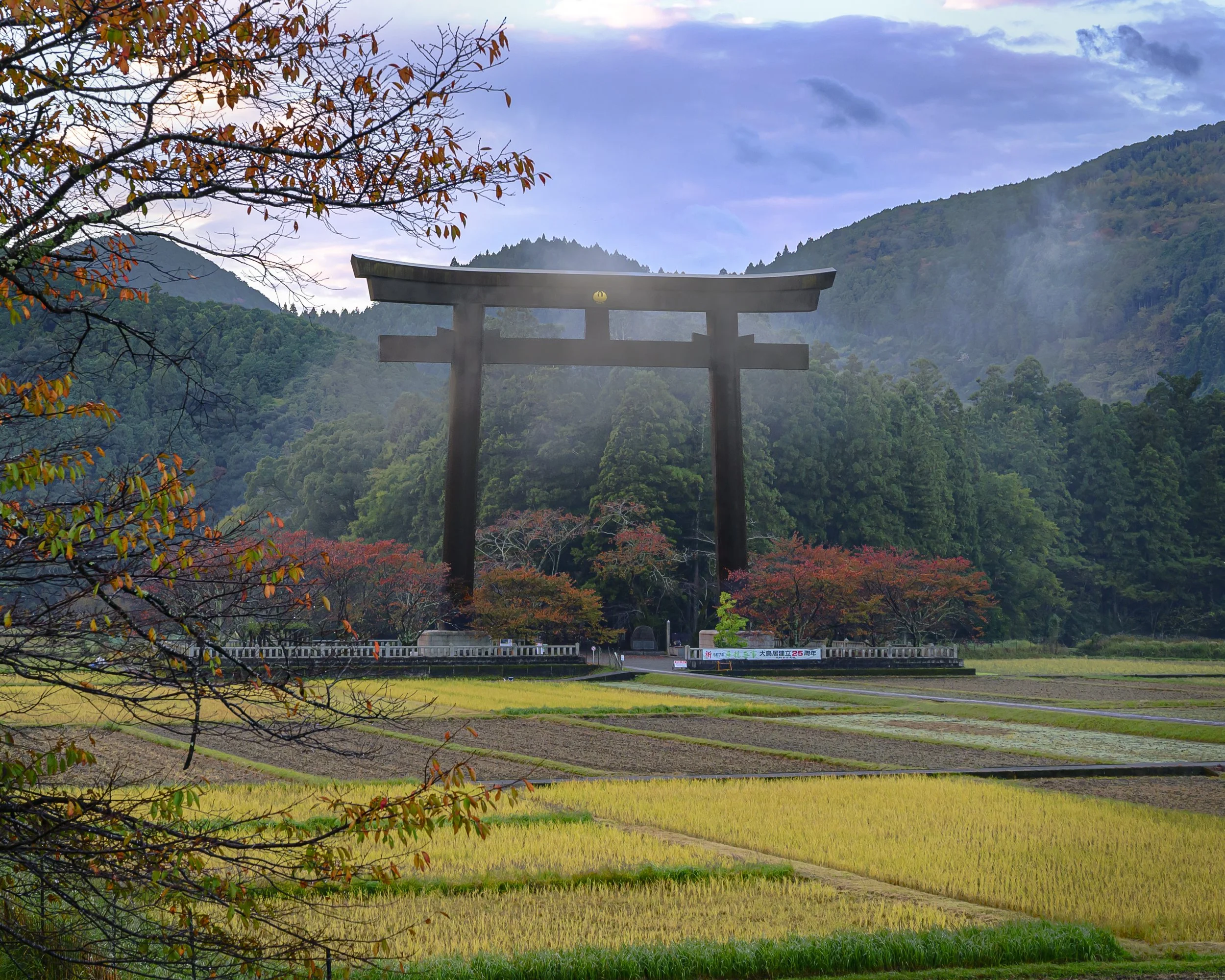
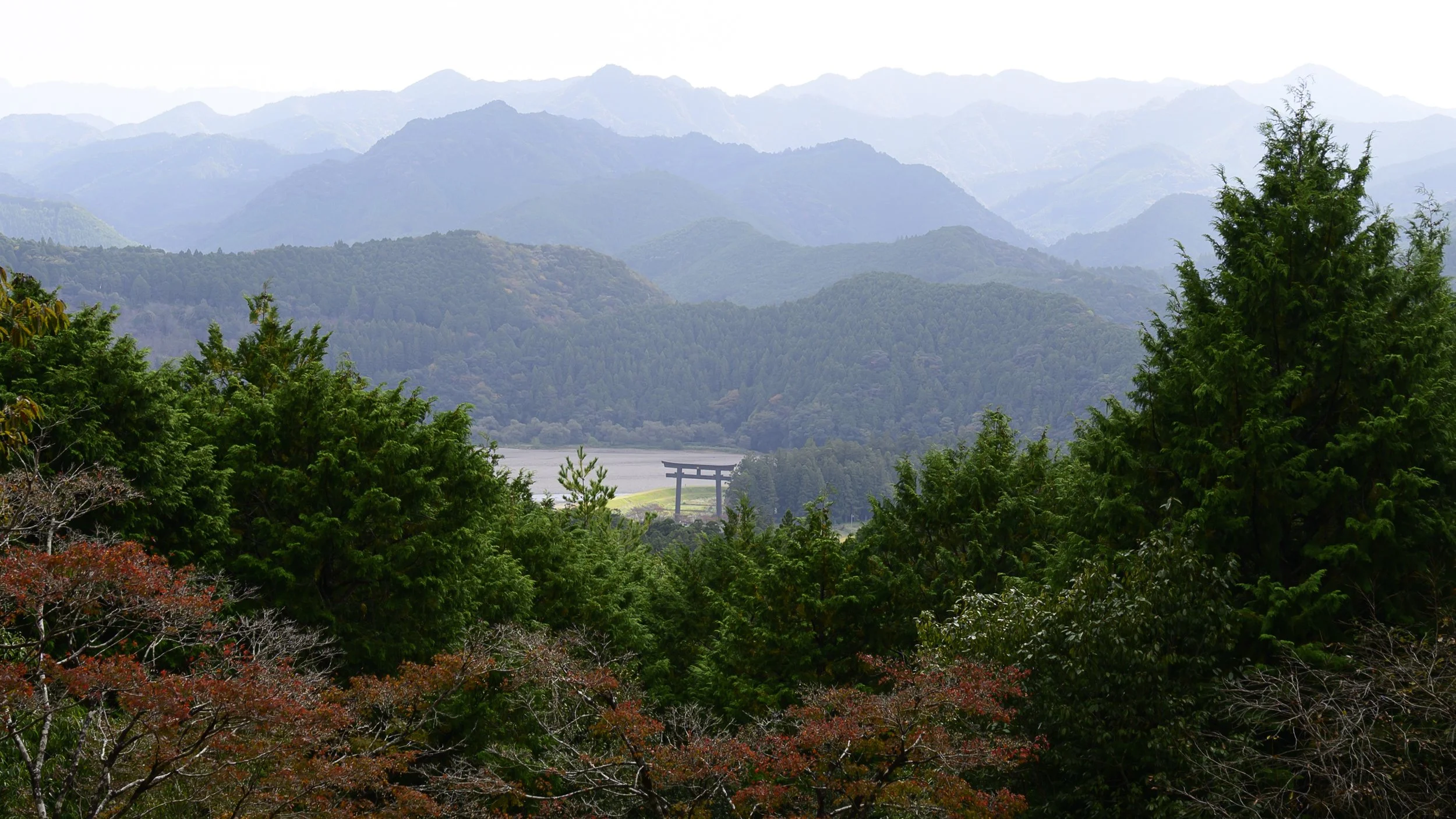
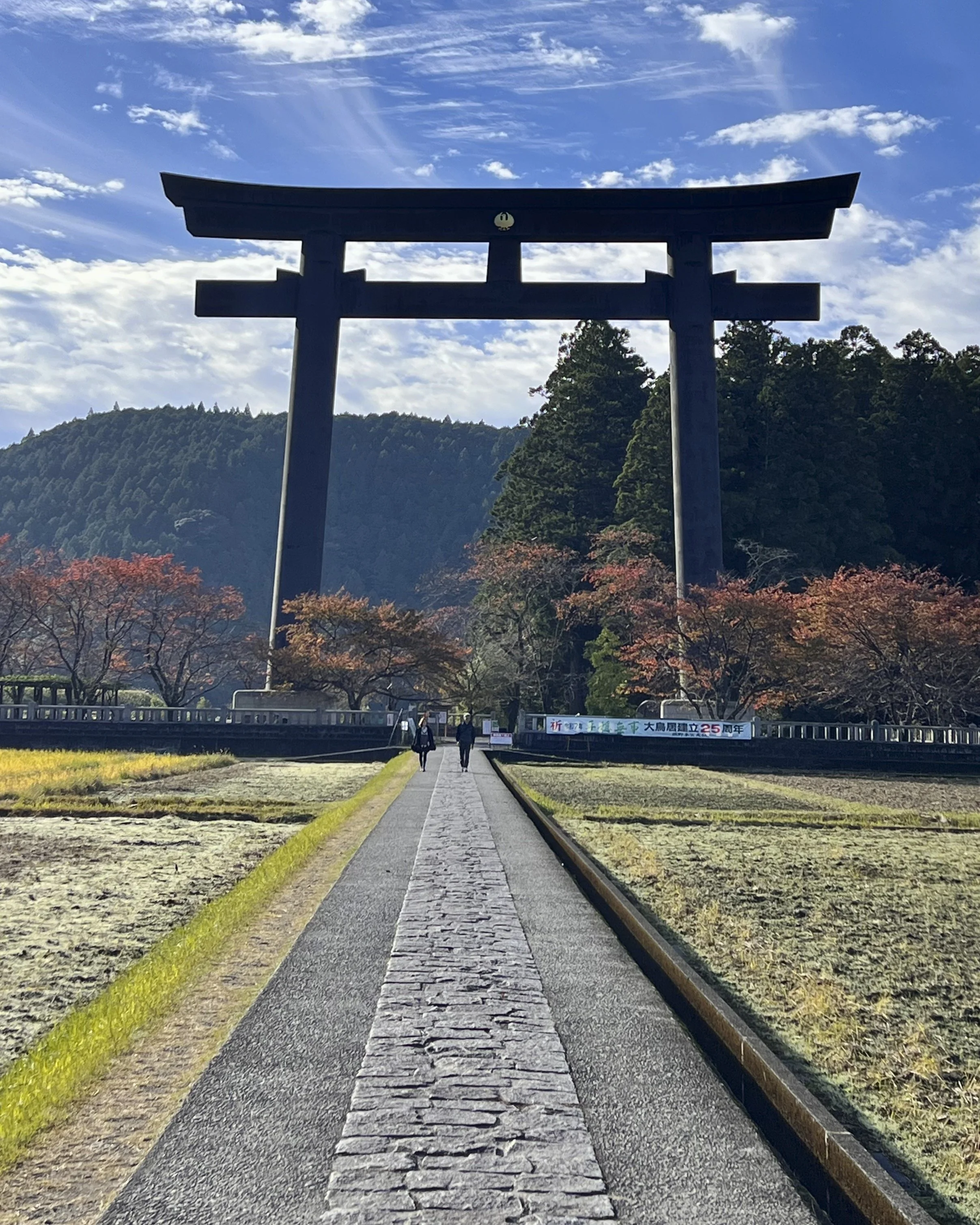
From Tsugizakura-oji the route continued over the Waraji-toge pass and descended into Yunomine Onsen — one of Japan's oldest hot spring villages, its thermal waters rising from the earth for over 1,800 years. A brief stop in the village before the trail climbed again out of the valley and over the final ridge into Hongu, descending at last to Kumano Hongu Taisha, the most sacred of the three Kumano Grand Shrines. Nearby Oyunohara, the shrine's original location, is marked by the world's largest torii gate. After a day like that, the sight of it through the trees felt well earned.
Day 3 — Kumano Hongu Taisha
Day of Exploration
A second night in the Hongu area gives the hiker a chance to explore before the multiple mountain passes ahead. Overnight at Kumano Base, an Airbnb well located for pilgrims in the heart of Hongu village.
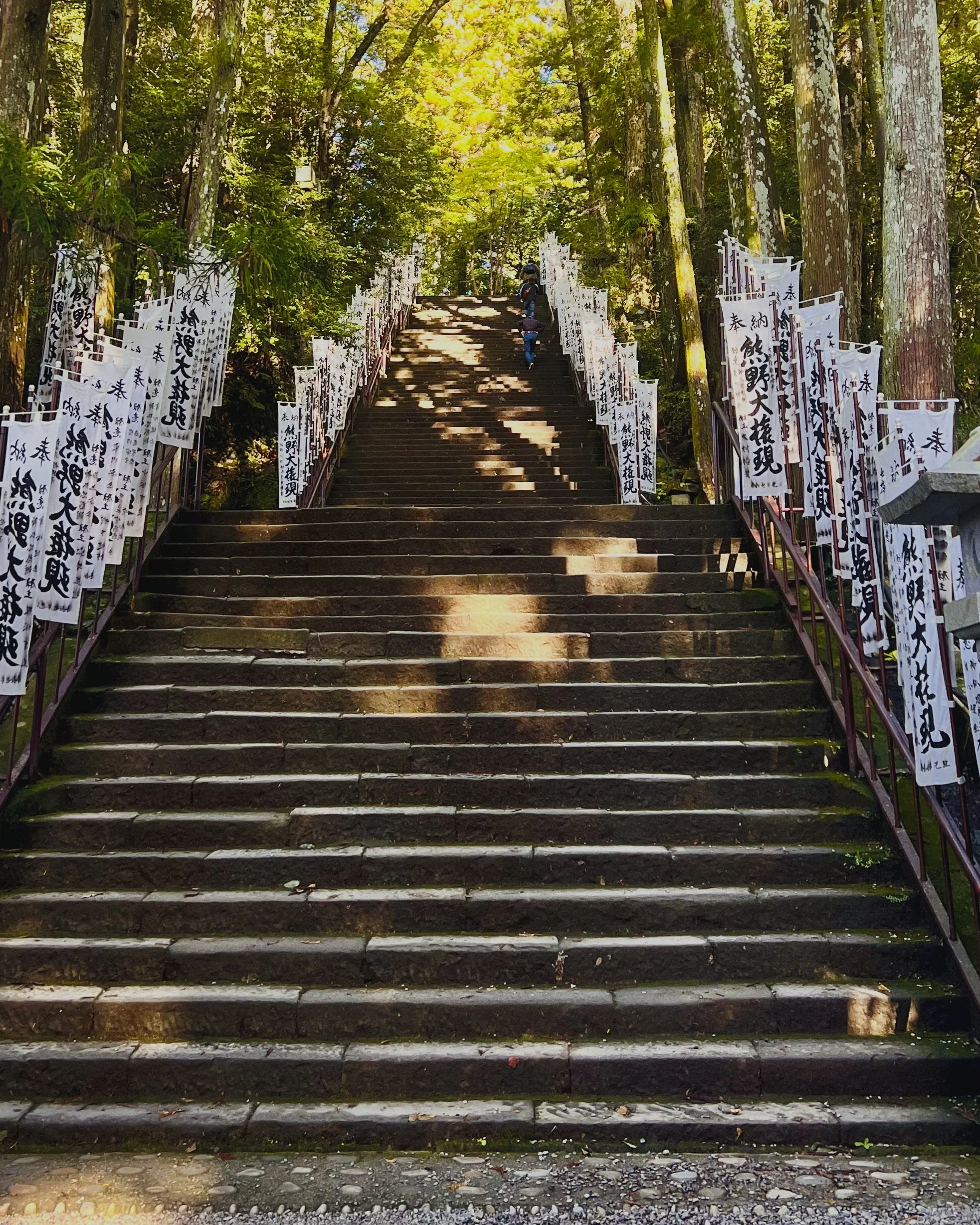
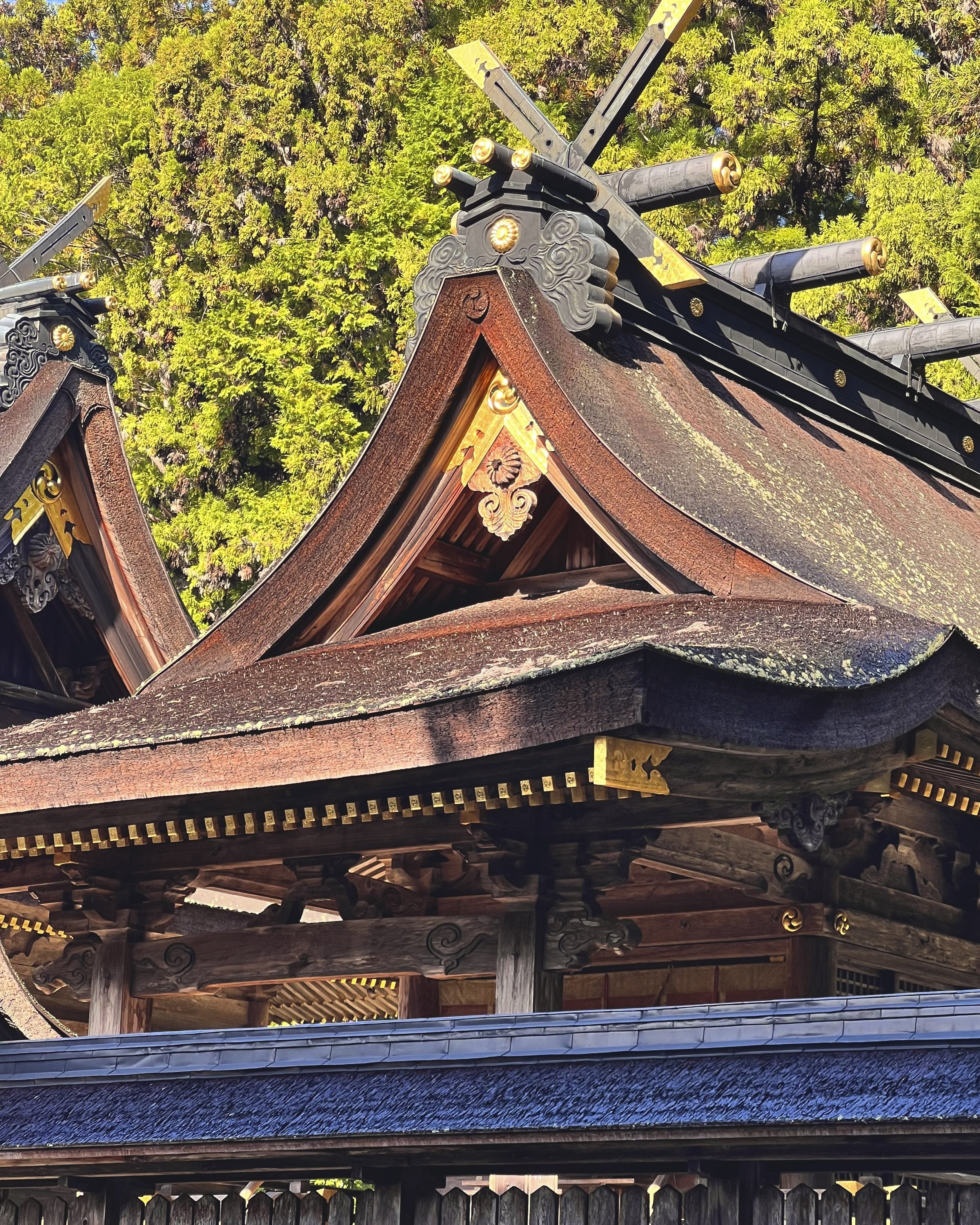
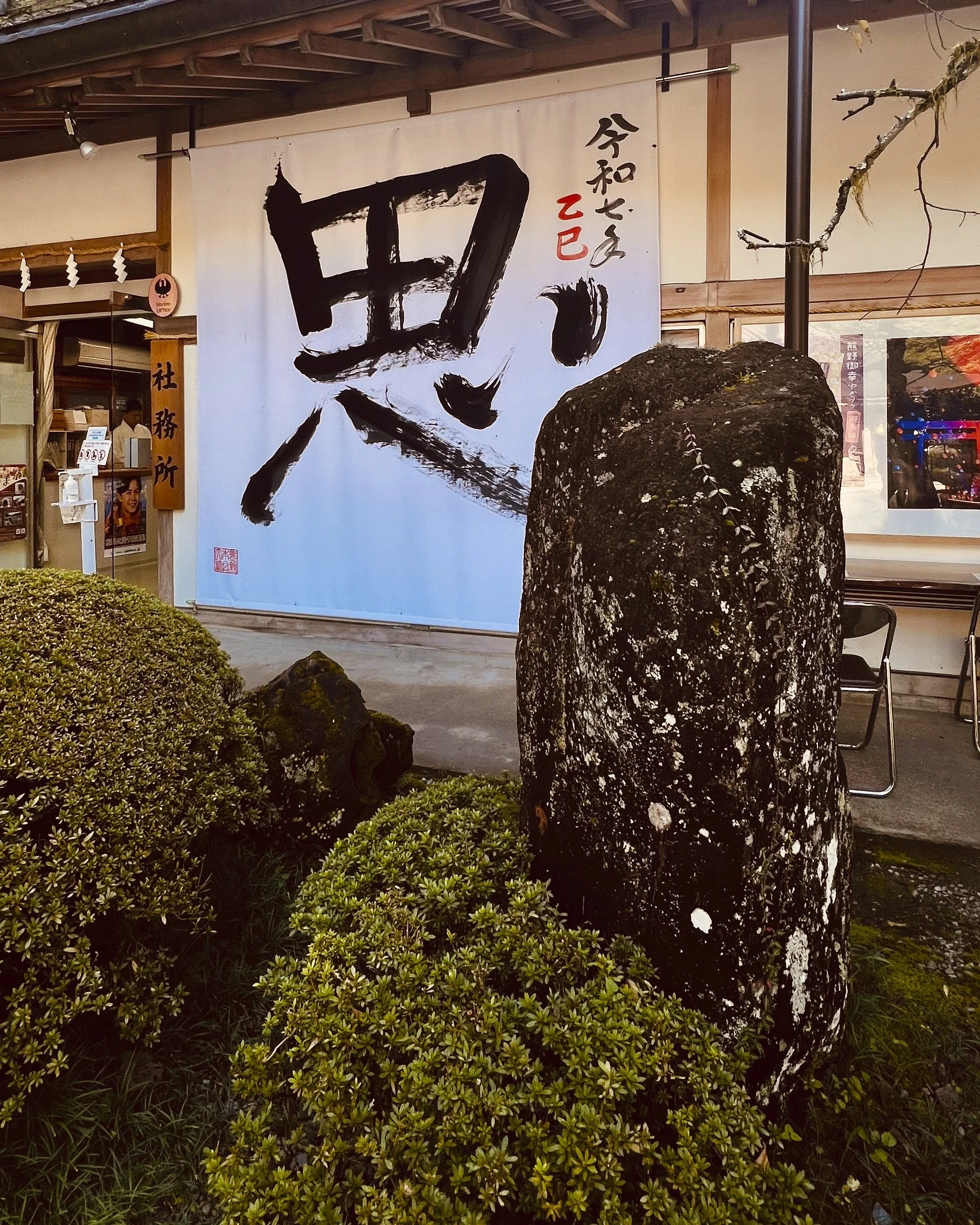
The morning is best spent around Kumano Hongu Taisha itself — the forested approach, the 158 stone steps to the main hall, and the surrounding cedar groves reward a slower look than the previous evening's arrival allows. Tearoom Yasushi, near the torii gate, is a good first stop for coffee before heading out — the owners are friendly and welcoming to pilgrims passing through.
From the shrine, a 500-metre walk leads down to Oyunohara — the shrine's original riverside site on a sandbank at the confluence of the Kumano and Otonashi Rivers. The site served as the sacred heart of Kumano for nearly two thousand years until August 1889, when a devastating flood swept through and destroyed much of the complex. The surviving buildings were relocated to the present hilltop site, one kilometre away and clear of the floodplain. Today Oyunohara is an open grassy plain marked by the world's largest torii gate — 34 metres tall and 42 metres wide. From Oyunohara the Dainichi-goe trail climbs roughly 240m through cedar forest to a viewpoint listed among Wakayama's Top 100 Sunset Spots — the only place where the full scale of the torii can be appreciated from above. A round trip of around 4–5 km from the shrine.
For lunch, Menya Mitsuashi is the popular local ramen shop — its name taken from the sacred three-legged Yatagarasu crow of Kumano — open 11:00–15:00.
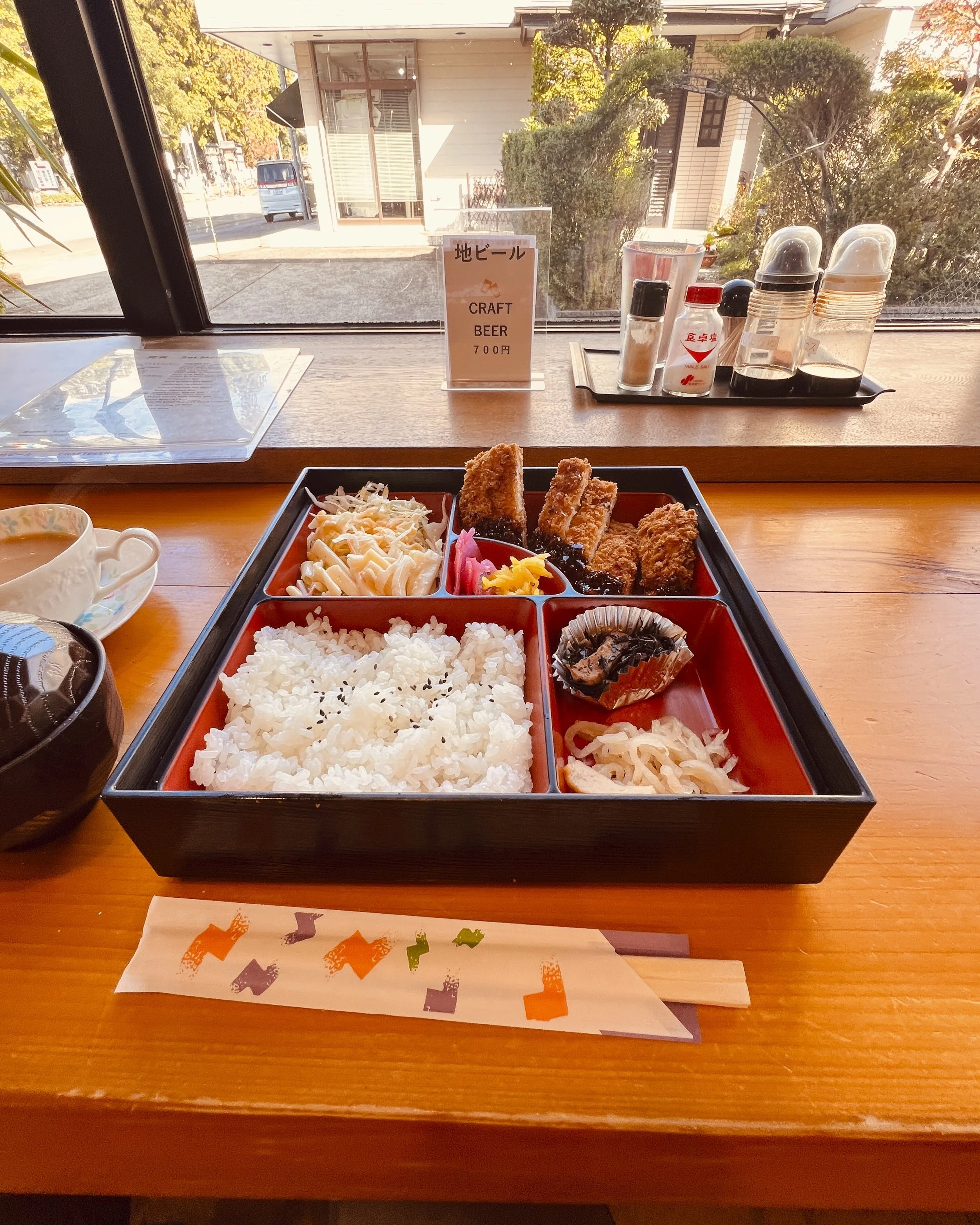
A short bus ride then brings you to Yunomine Onsen, one of Japan's oldest hot spring villages. The standout is Tsuboyu — a tiny private timber bath perched over a creek, UNESCO World Heritage listed in its own right, bookable on a first-come, first-served 30-minute basis. Locals gather at the communal Yuzutsu hot spring cooking basin to boil eggs and sweet potatoes in the thermal water — and there is a beer vending machine on the main street that, after two days on the trail, will seem like an excellent idea.
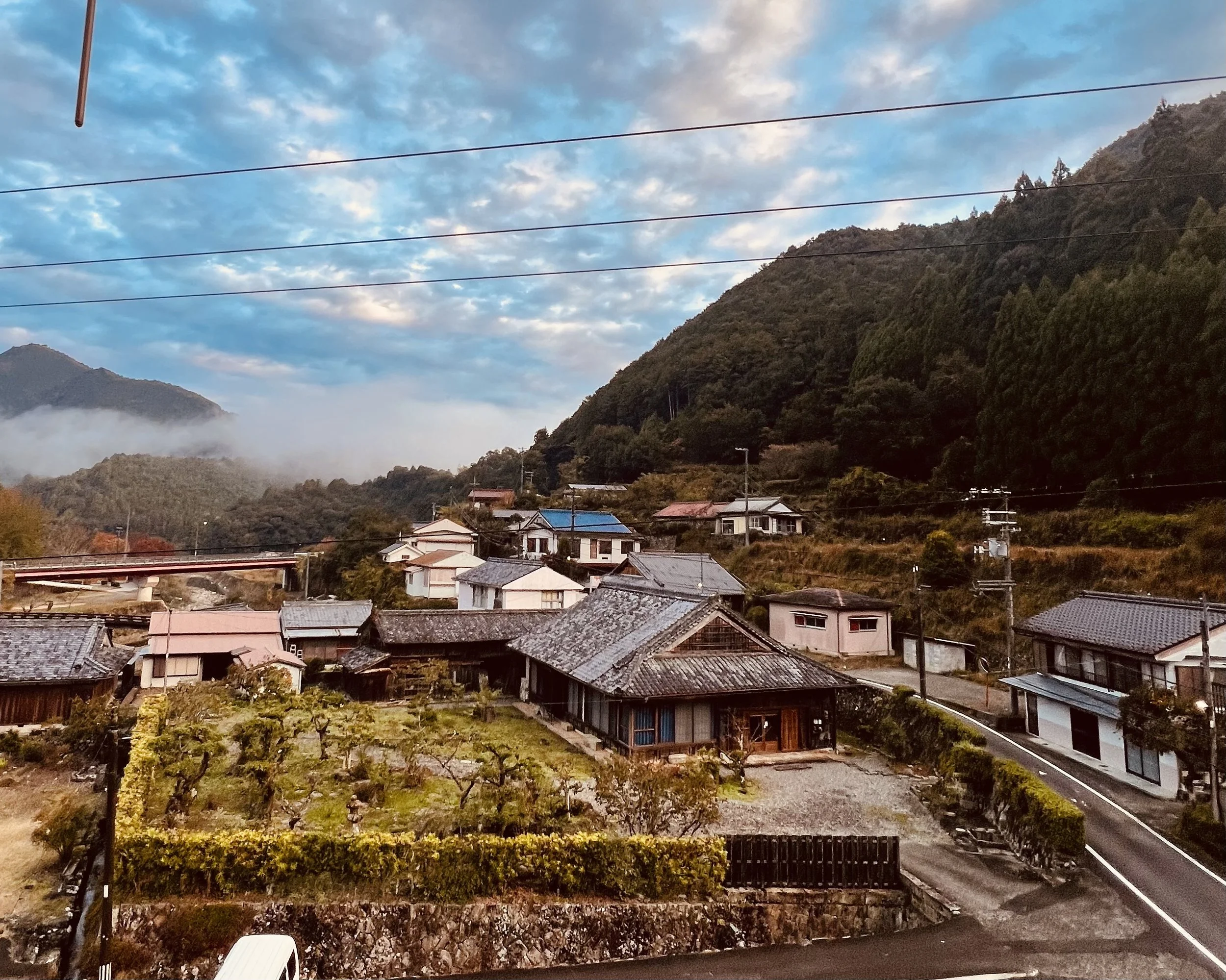
Day 4 — Hongu to Koguchi
15.7 km | 830m elevation gain
From Hongu, the trail continues west from the small riverside settlement of Ukegawa, leaving the populated Hongu valley behind and pushing into wilder, more remote mountain terrain.
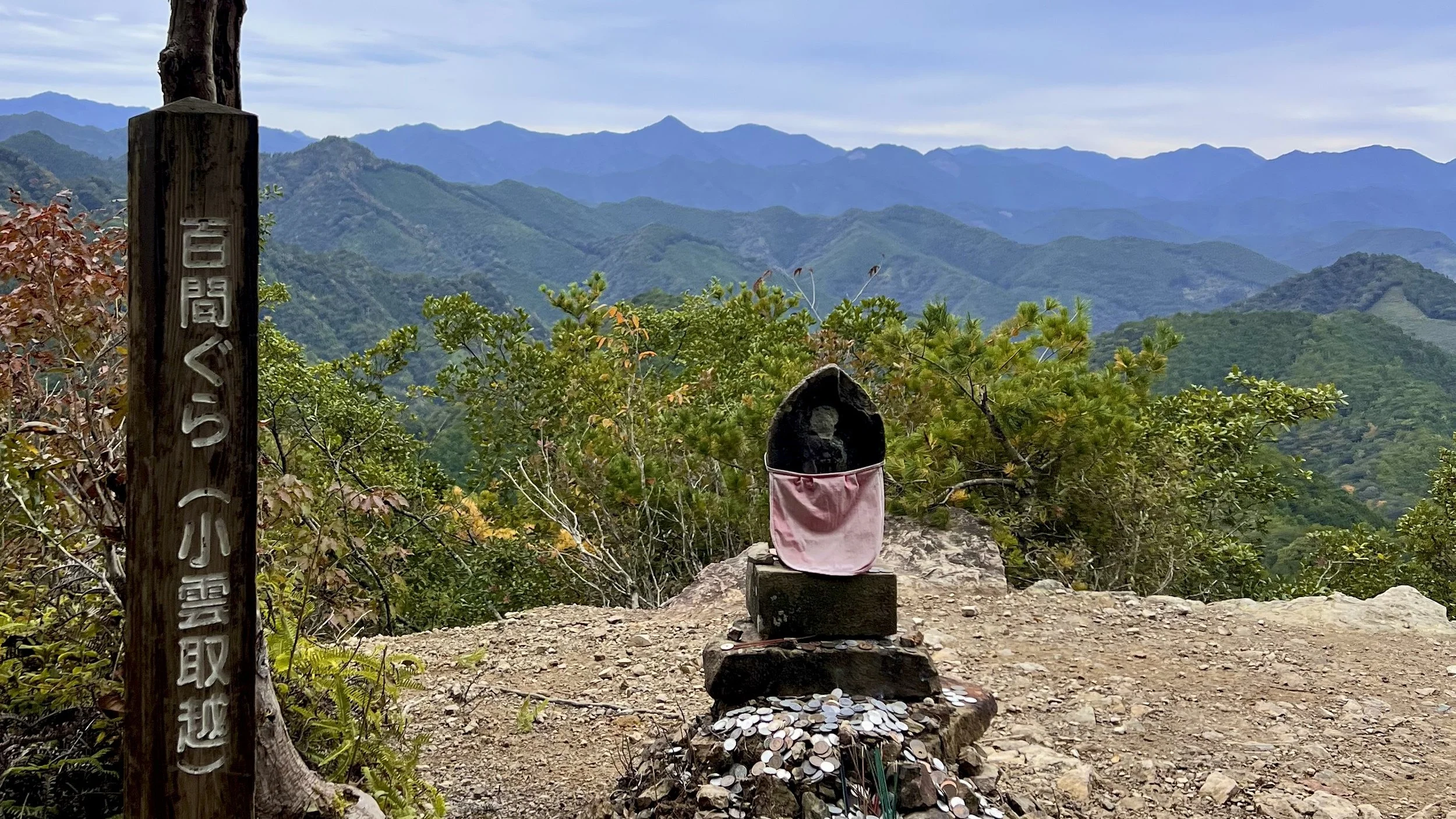
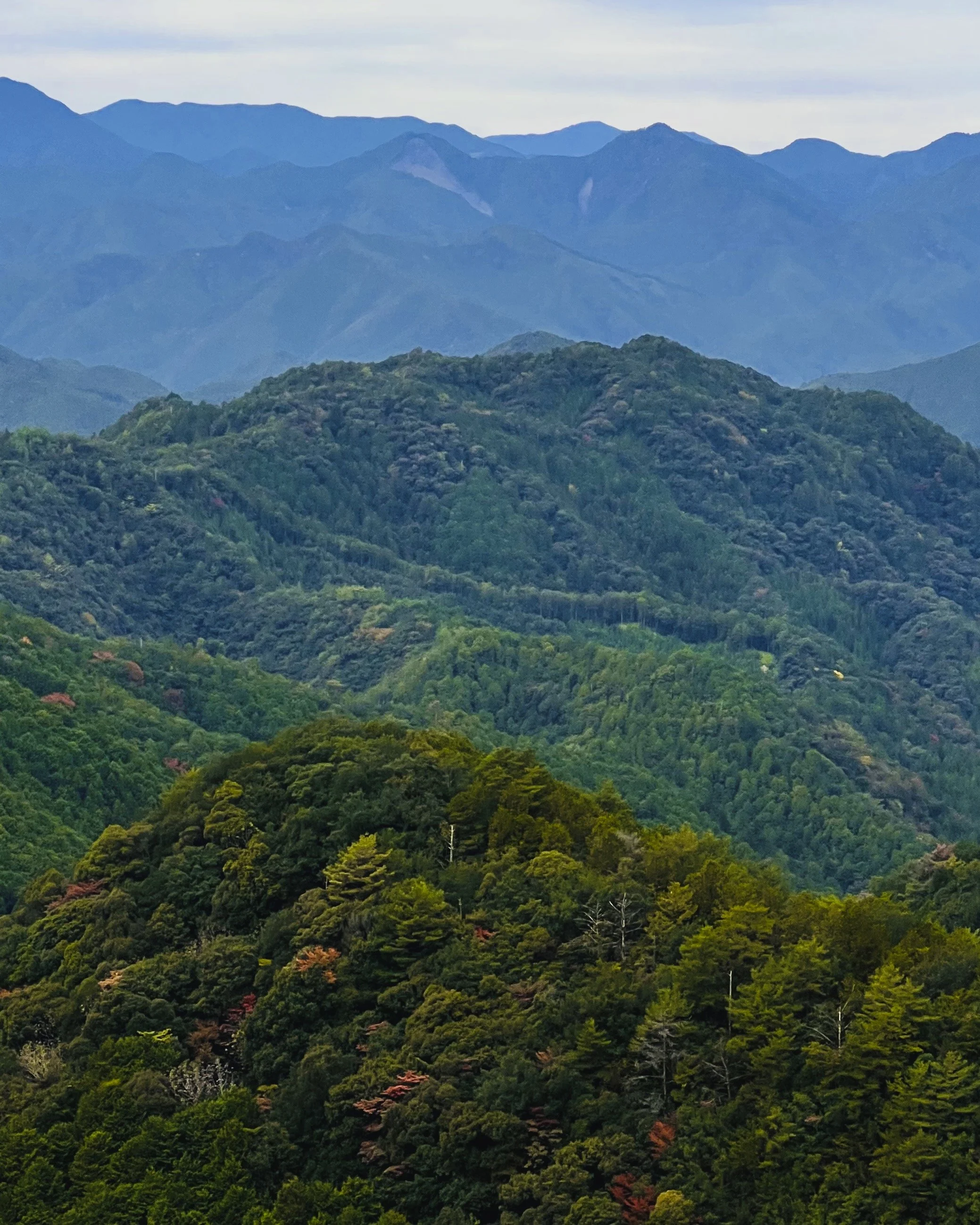
The day's defining feature is the Kogumotori-goe pass — a sustained climb through dense cedar and cypress forest with few waypoints and little company. The trail gains elevation steadily from the valley floor, the surrounding mountains closing in as the path narrows and the forest deepens. At the pass the views open briefly before the route descends steeply on the far side, dropping into the tight river valley below.
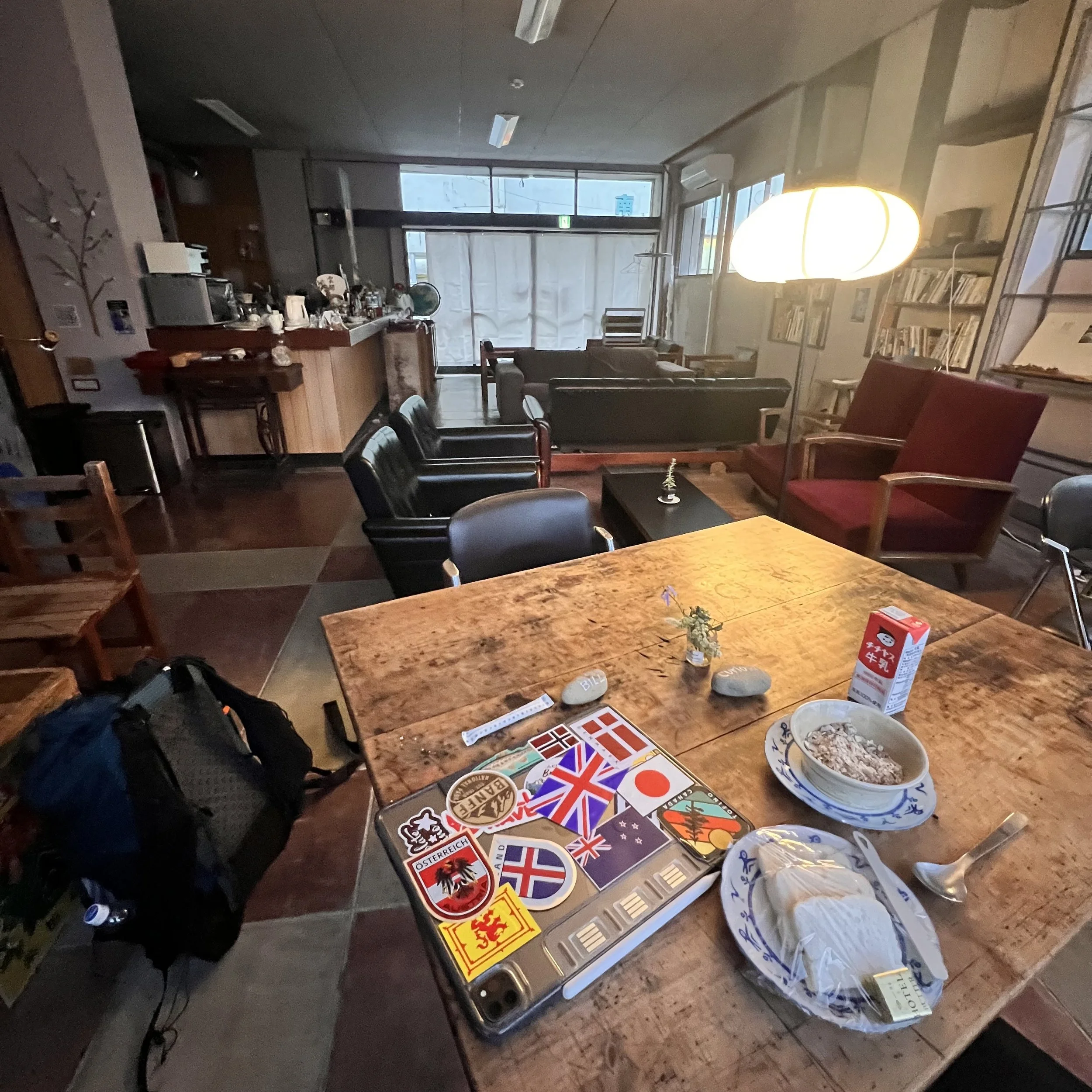
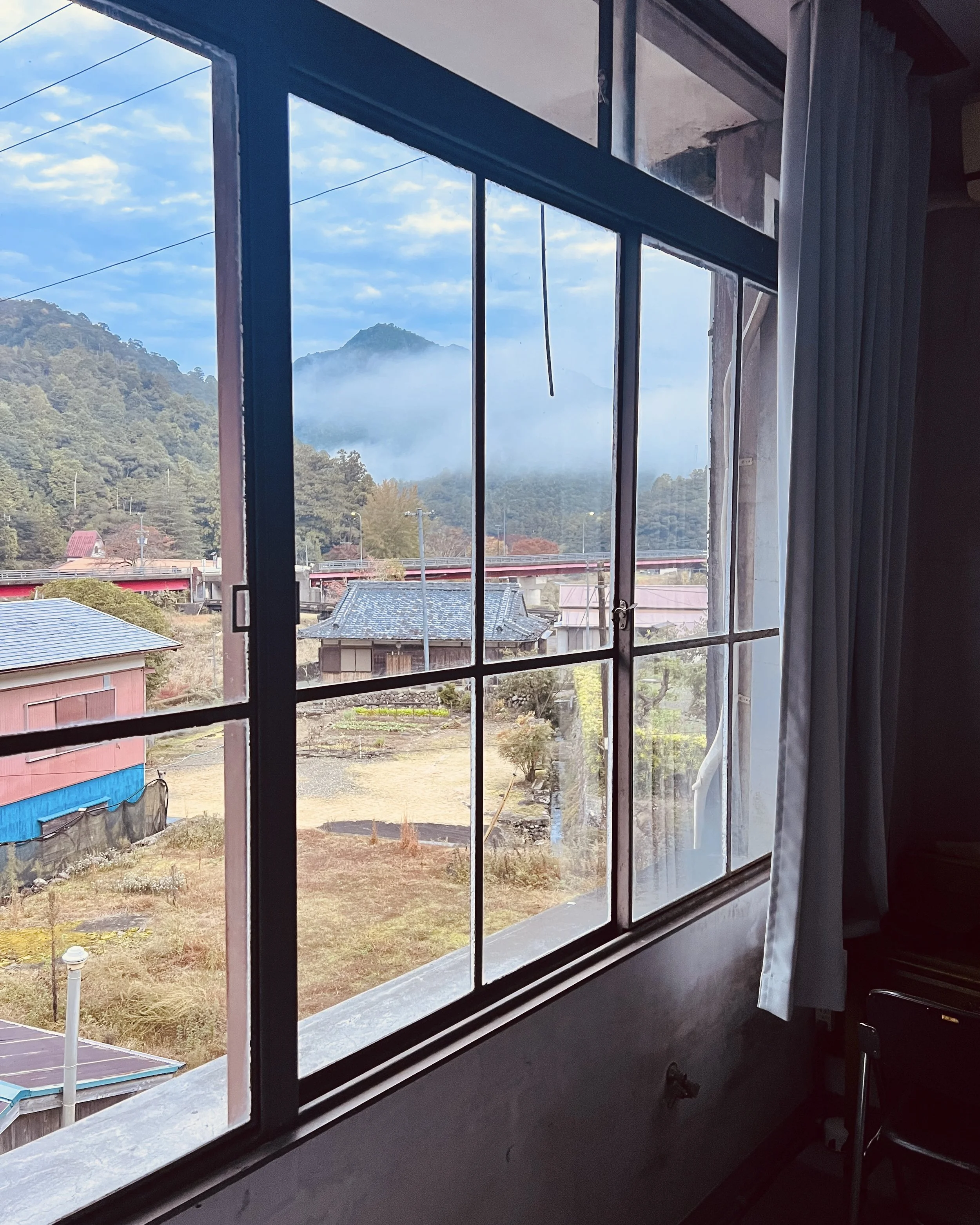
Koguchi is one of the smallest and most isolated settlements on the entire route — a handful of buildings wedged between forested slopes where the Nakahechi trail meets the river. Overnight at Kumano Kodo Lodge Kumoma — a converted old agricultural cooperative building right on the trail, with a coffee shop on the ground floor and guest rooms above. Once the cafe closes to the public for the evening, the space becames the guests' own — a uniquely quiet and atmospheric end to the day, with the sound of the river below and the forest closing in on all sides. With only two rooms, it books out fast and feels nothing like a conventional guesthouse.
Day 5 — Koguchi to Kumano Nachi Taisha
16.8 km | 1,177m elevation gain
The small convenience store in Koguchi opens at 7:00am — worth a stop to pick up food and water before setting out, as there are no restaurants or resupply points anywhere on the trail between here and Nachi. Pack enough for a full day.
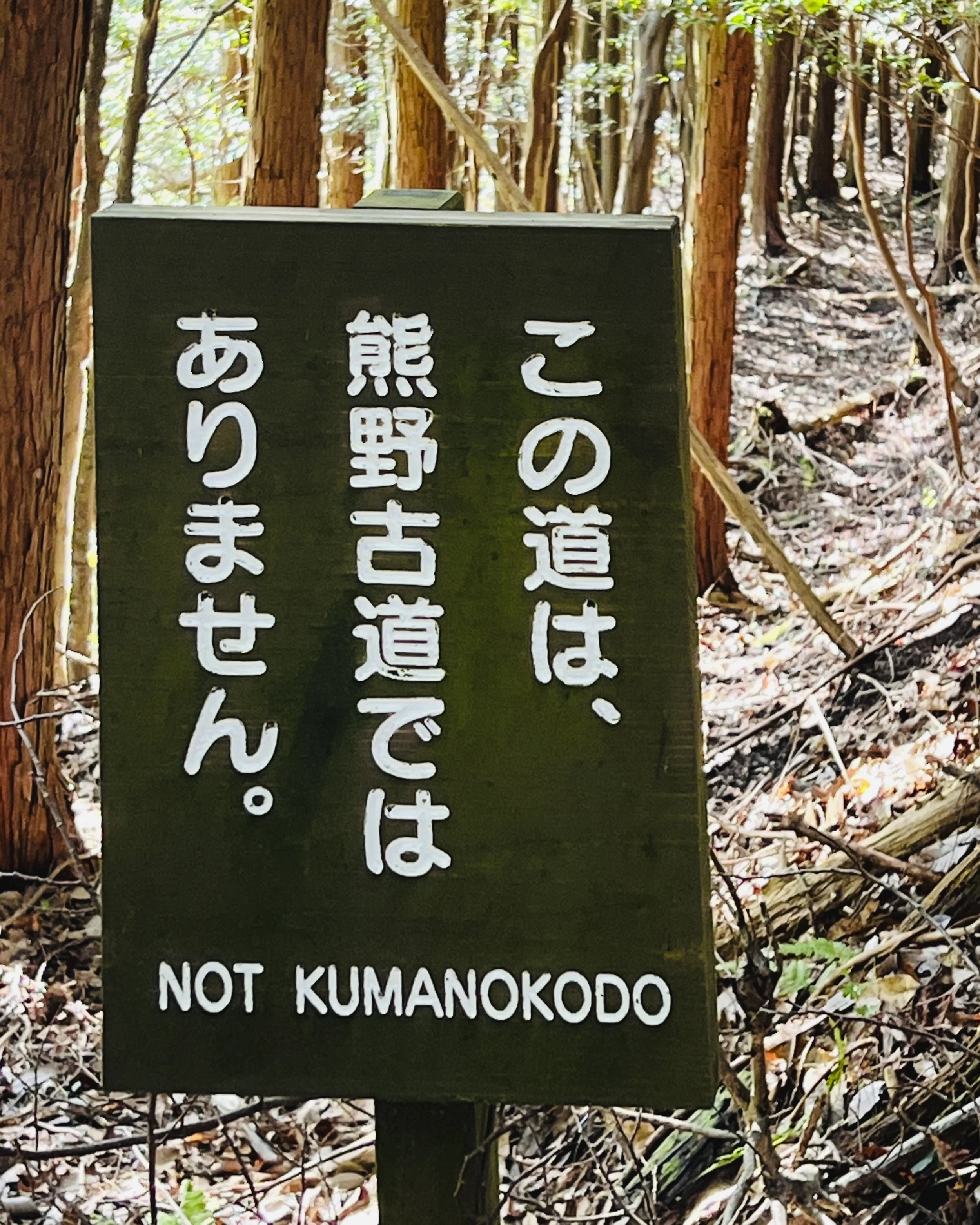
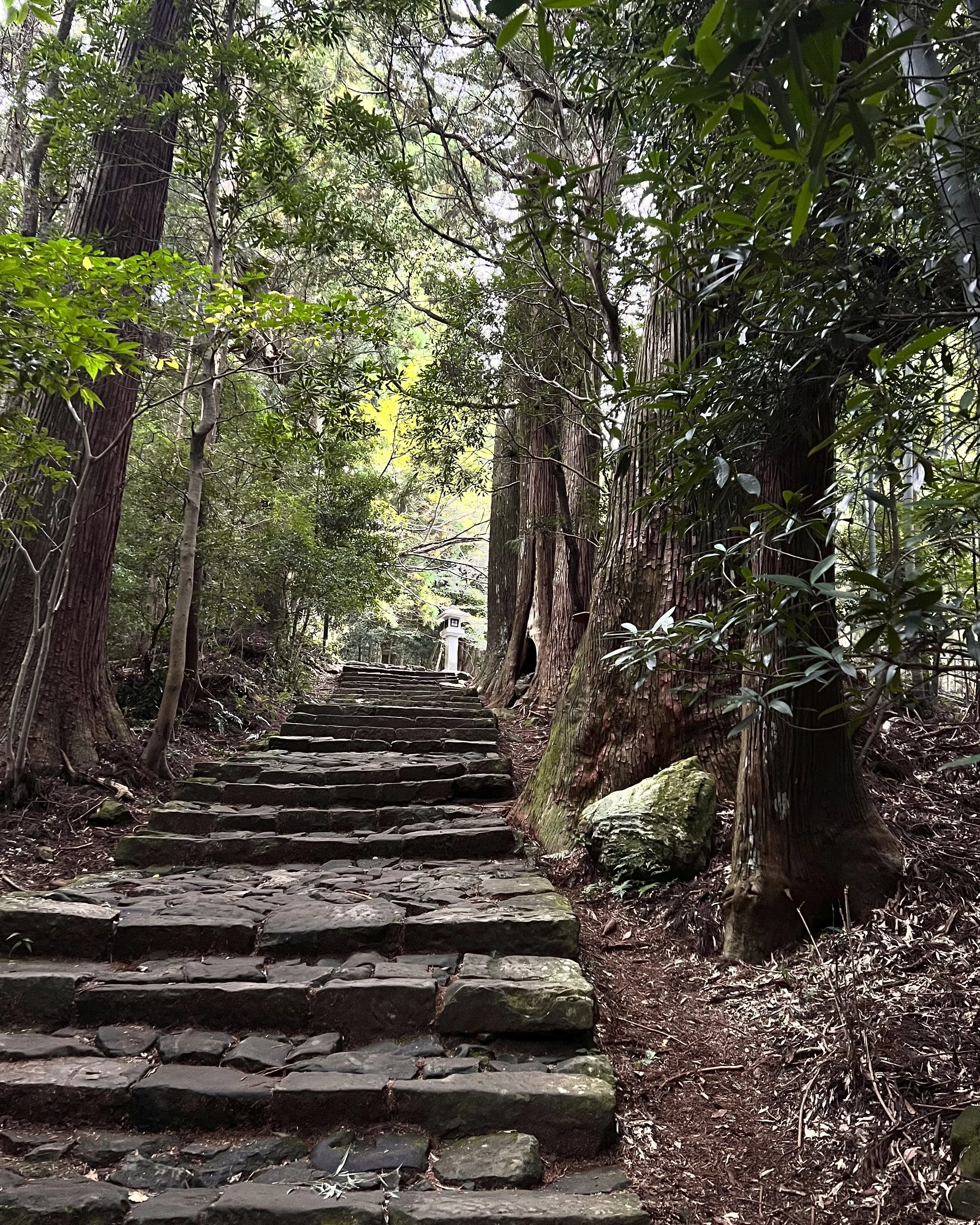
The Ogumotori-goe is widely regarded as the toughest section of the entire Nakahechi route, and it announces itself immediately. From the south end of Koguchi village the trail climbs almost 800m in the first 5 km — a relentless stone staircase through dense forest known historically as Dogiri-zaka, or "Body-breaking Slope." The name earns its keep. Take it steadily and let the forest do its work.
The climbing eventually relents at the Echizen-toge pass, the high point of the day, where the trail levels briefly near the remains of the Jizo-jaya Teahouse — a sheltered picnic spot beside a small bridge, a welcome mid-point rest. True to Japan's vending machine culture, a machine near the teahouse remains offers hot lattes — a small but very welcome find at this point on the trail. From here the route crosses and re-crosses a forestry road before ascending again through the eerily named Moja-no-Deai, the "Abode of the Dead" — a ridge section that has carried pilgrims through sacred mountain territory for over a thousand years.
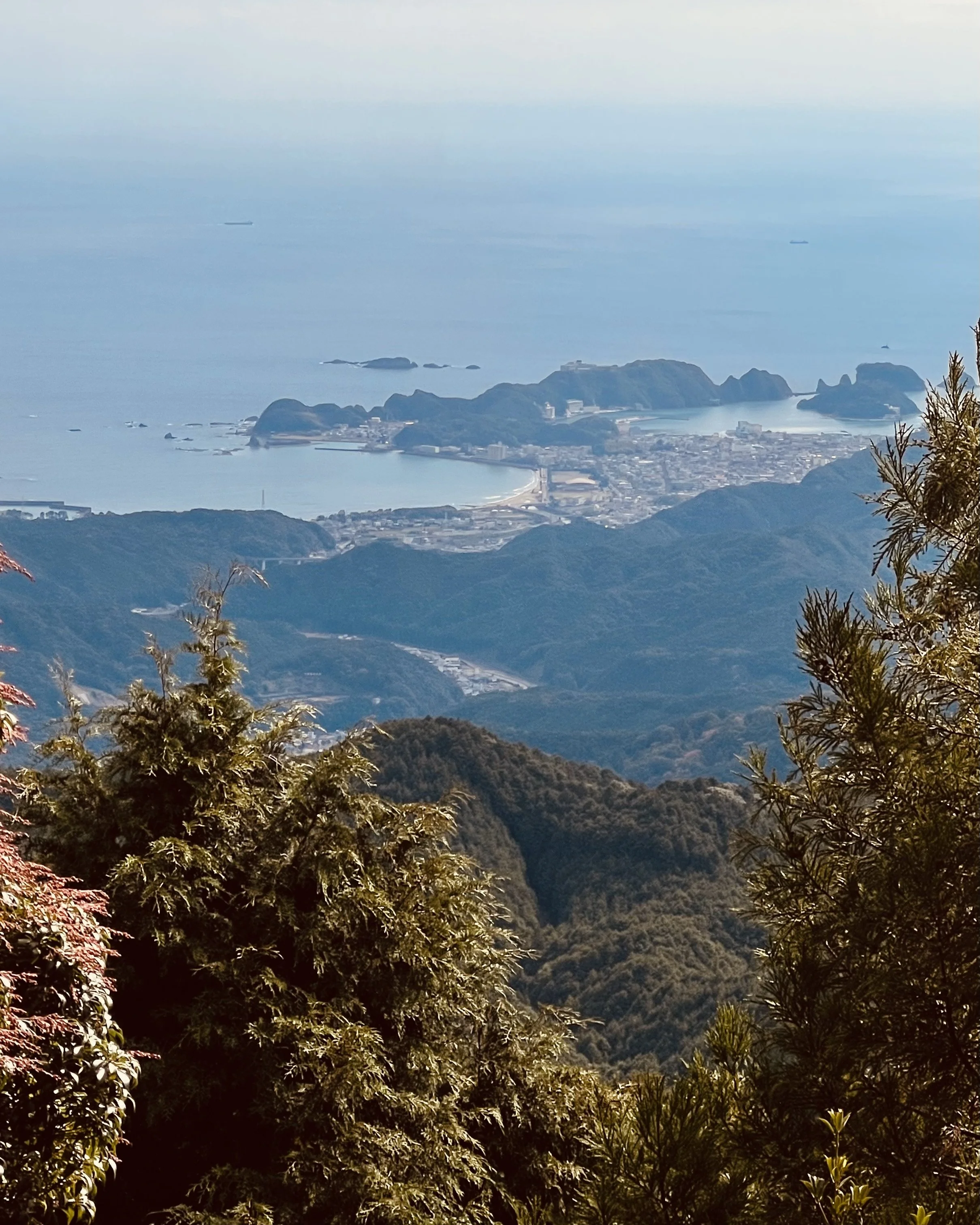
The reward for all of this is Funami-toge Pass, where the forest opens without warning to reveal the Pacific Ocean spreading across the horizon — the first sight of the sea since leaving Tanabe days earlier, and a moment that brings the scale of the journey sharply into focus.
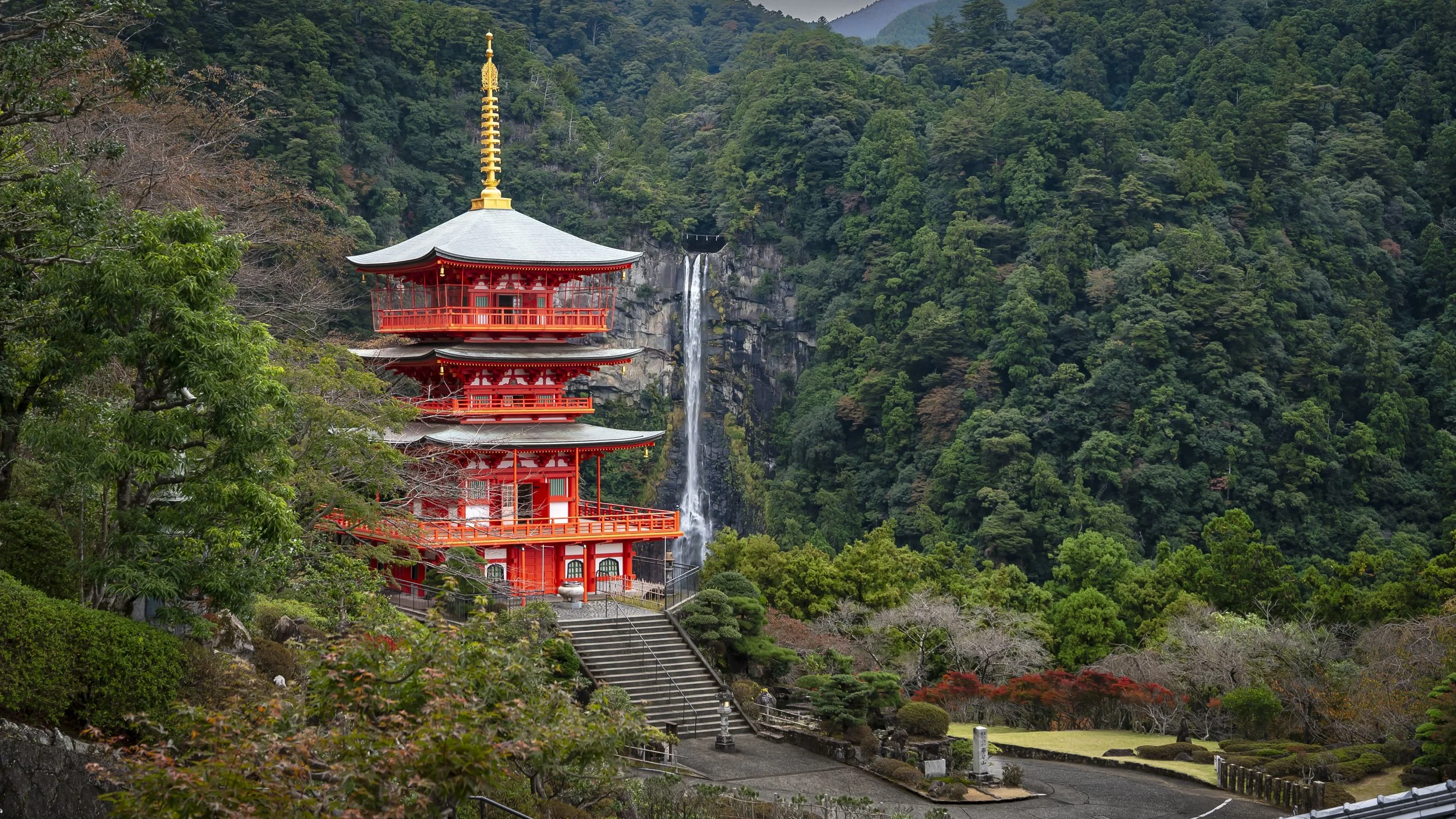
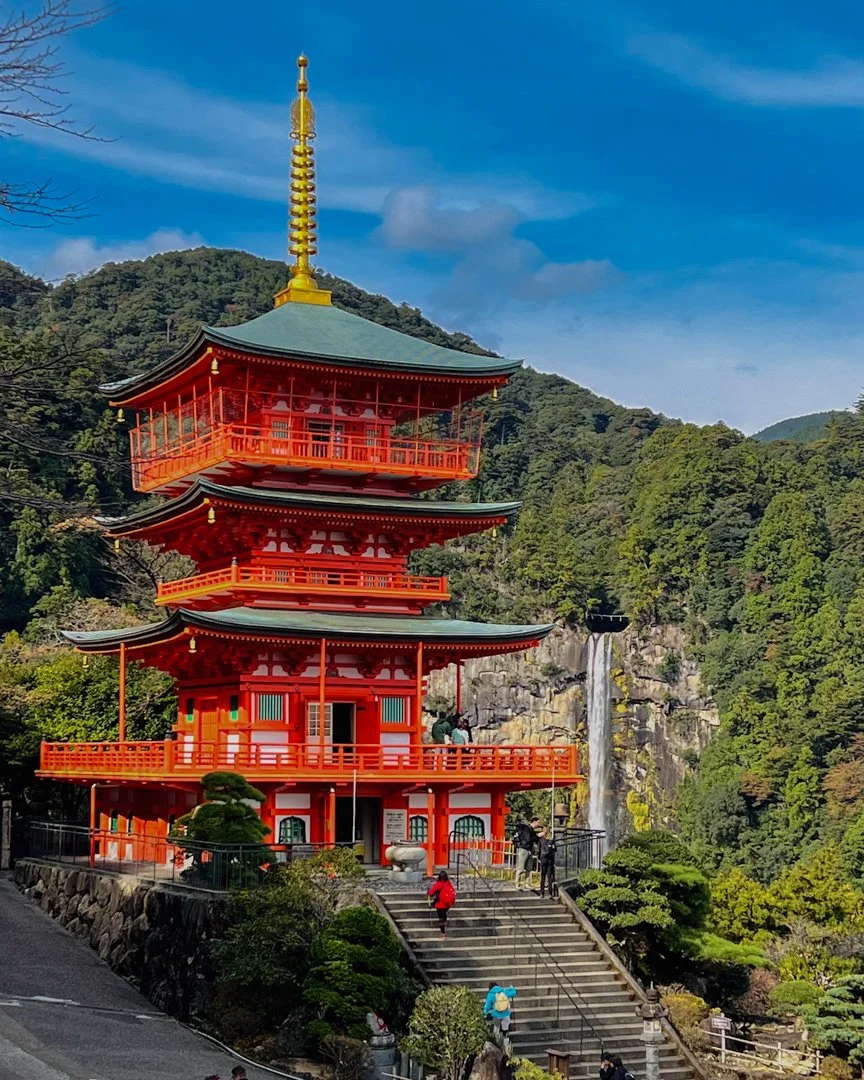
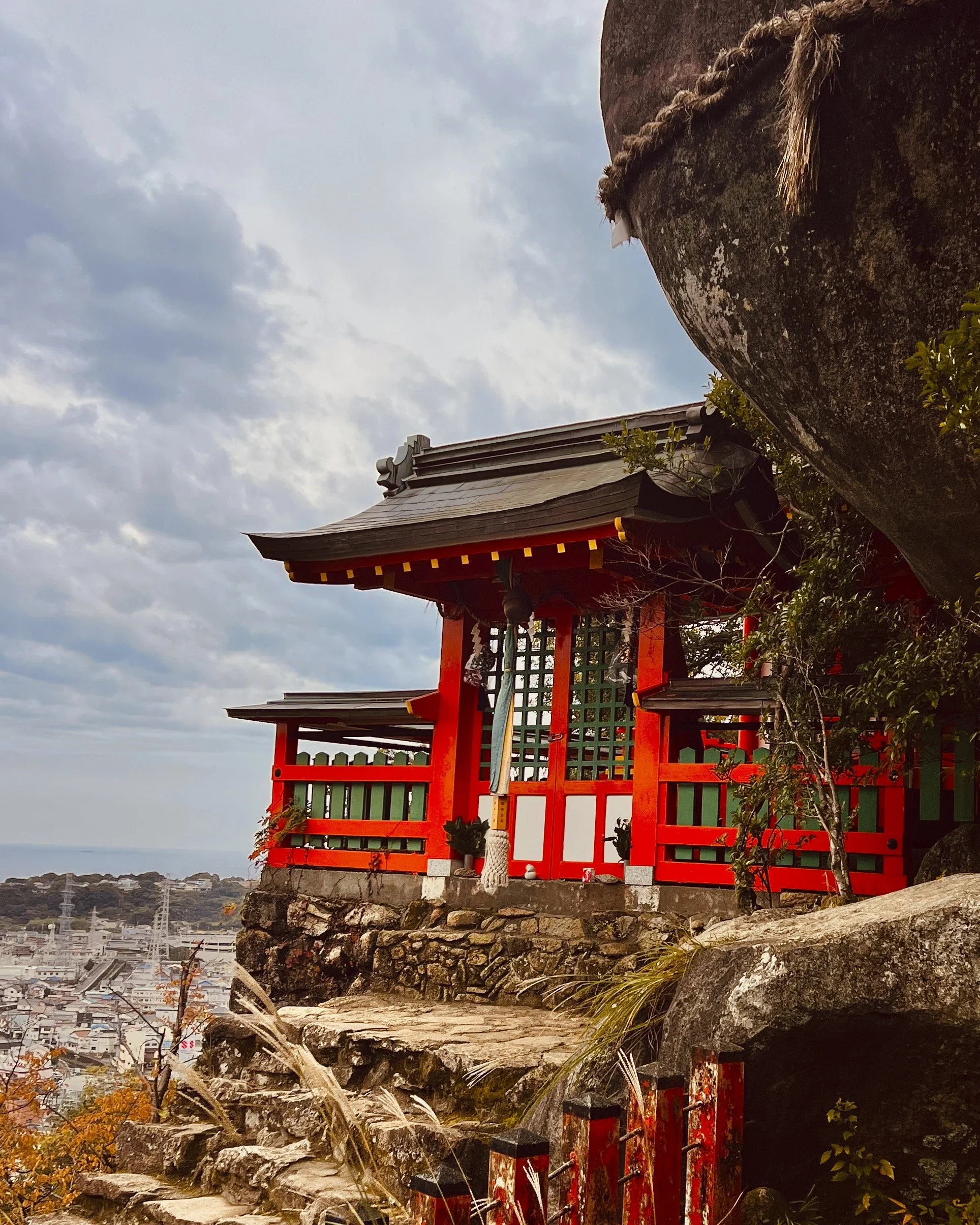
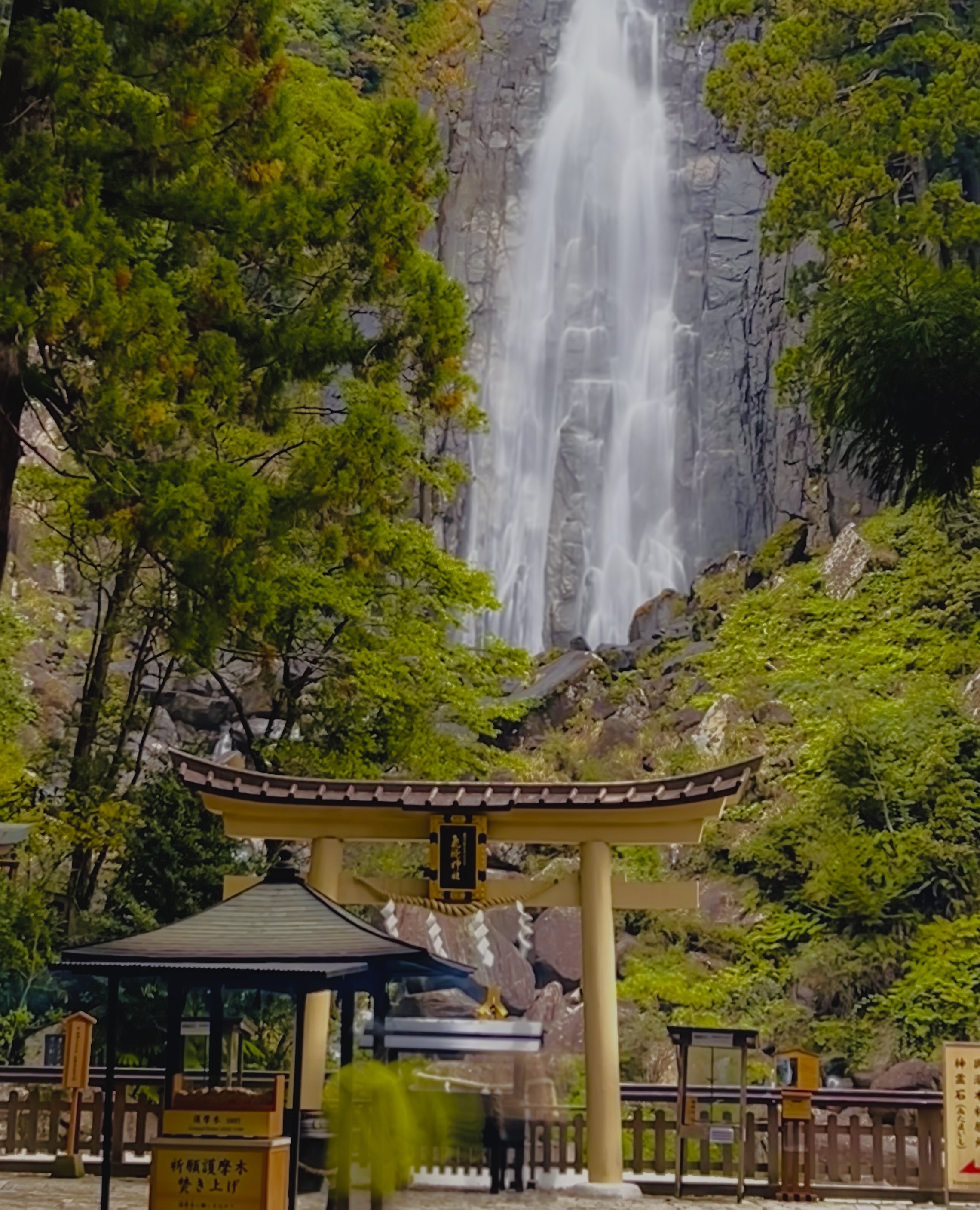
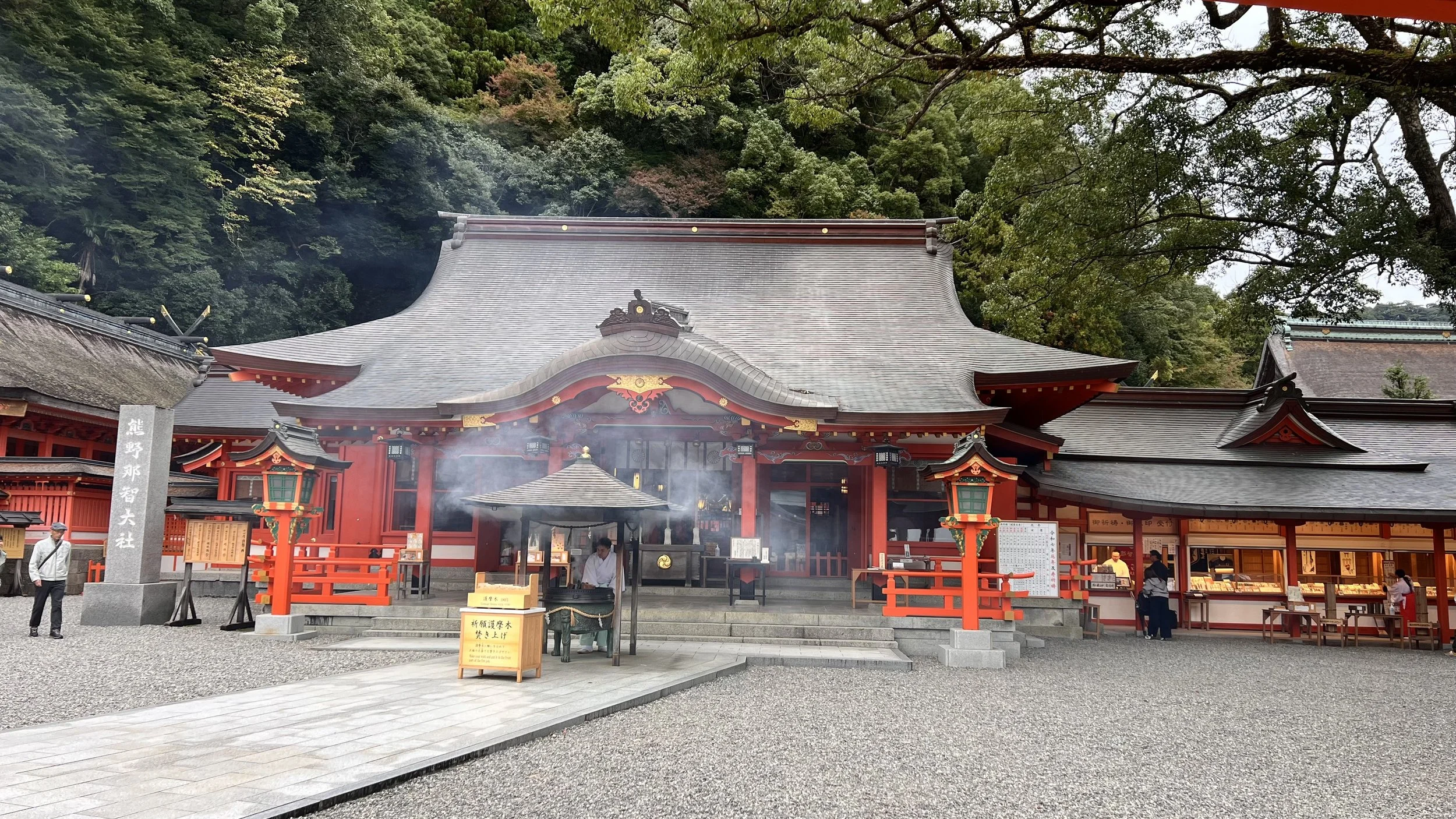
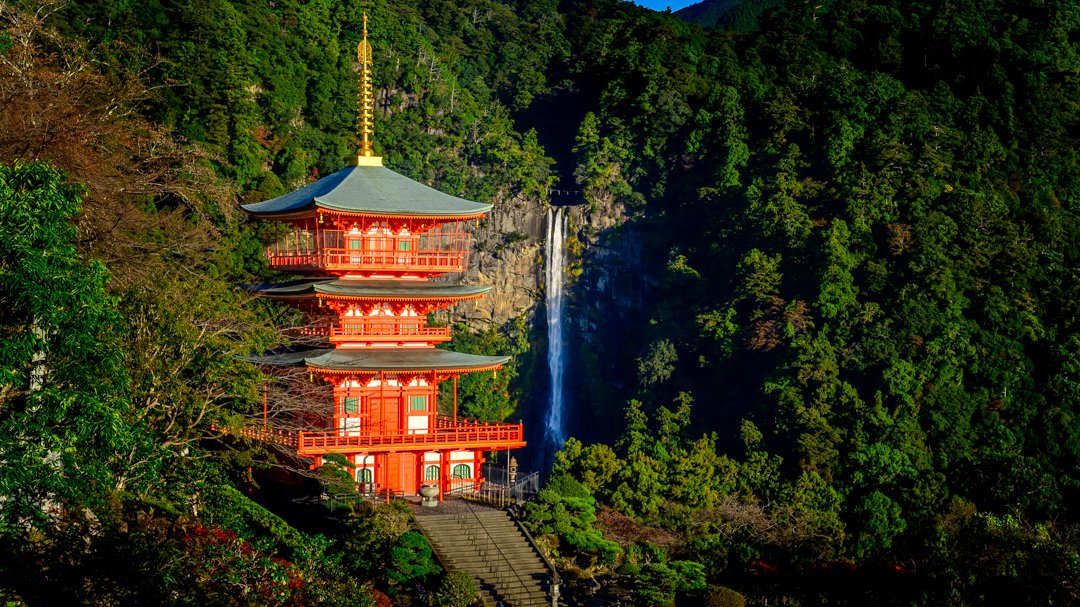
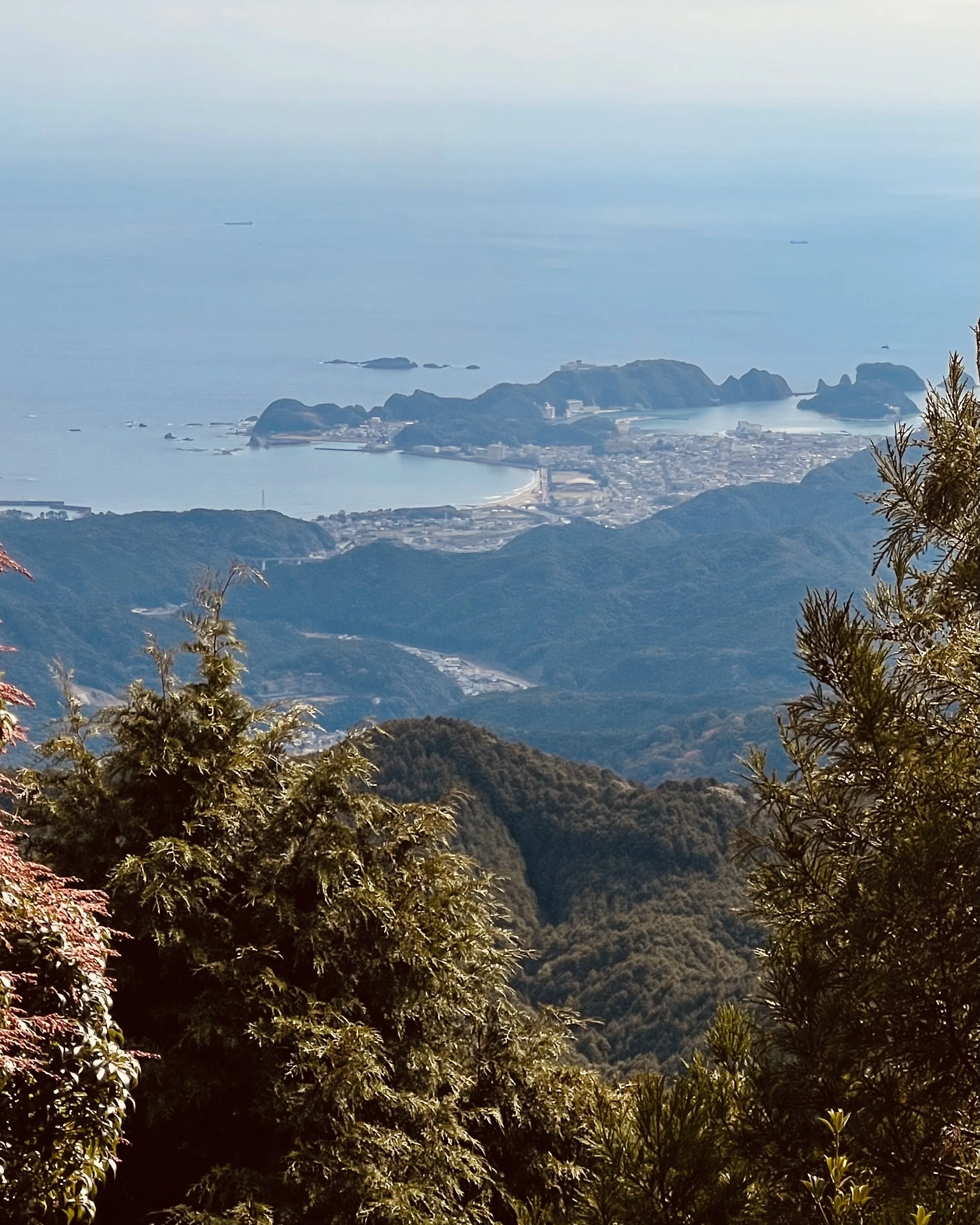
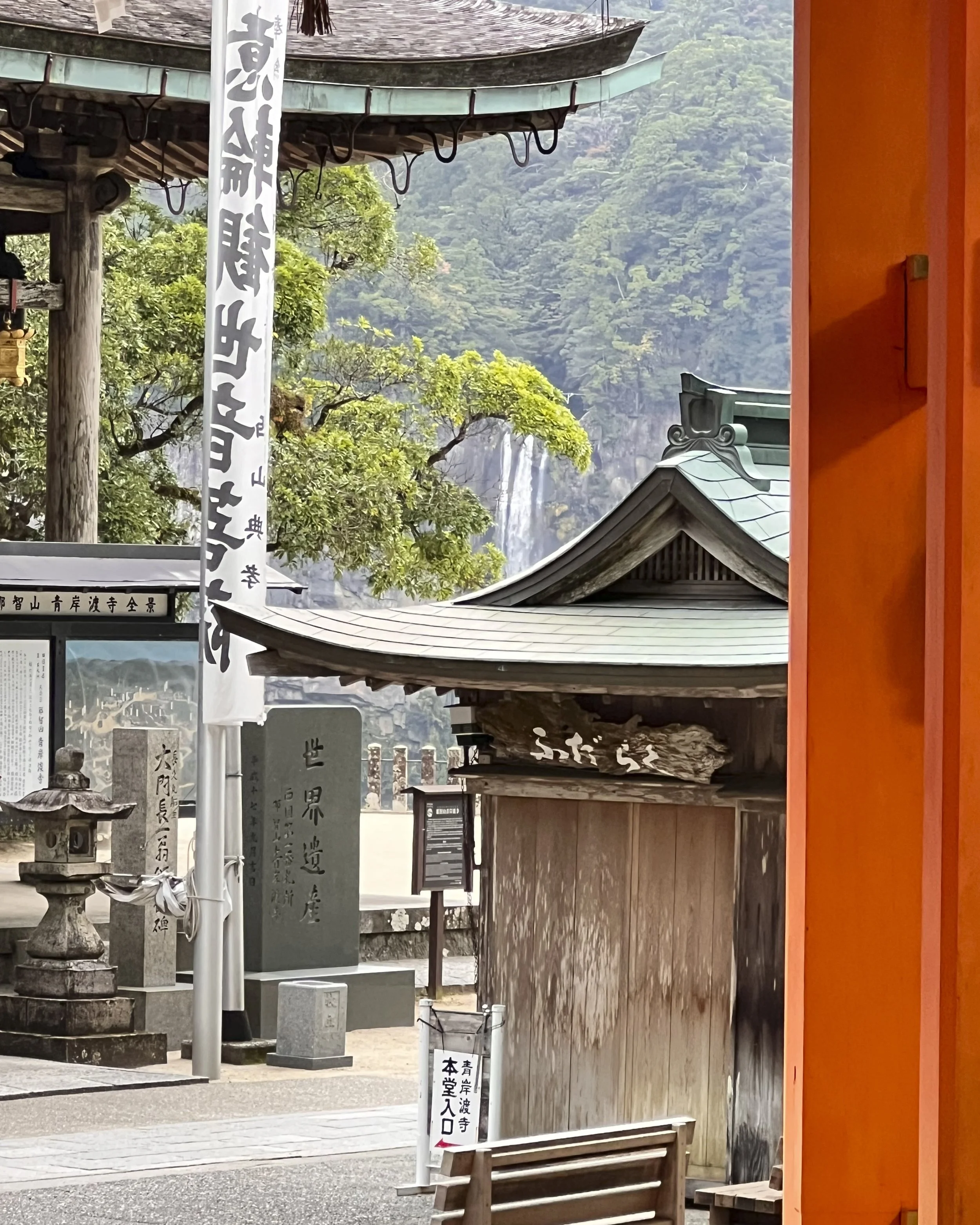
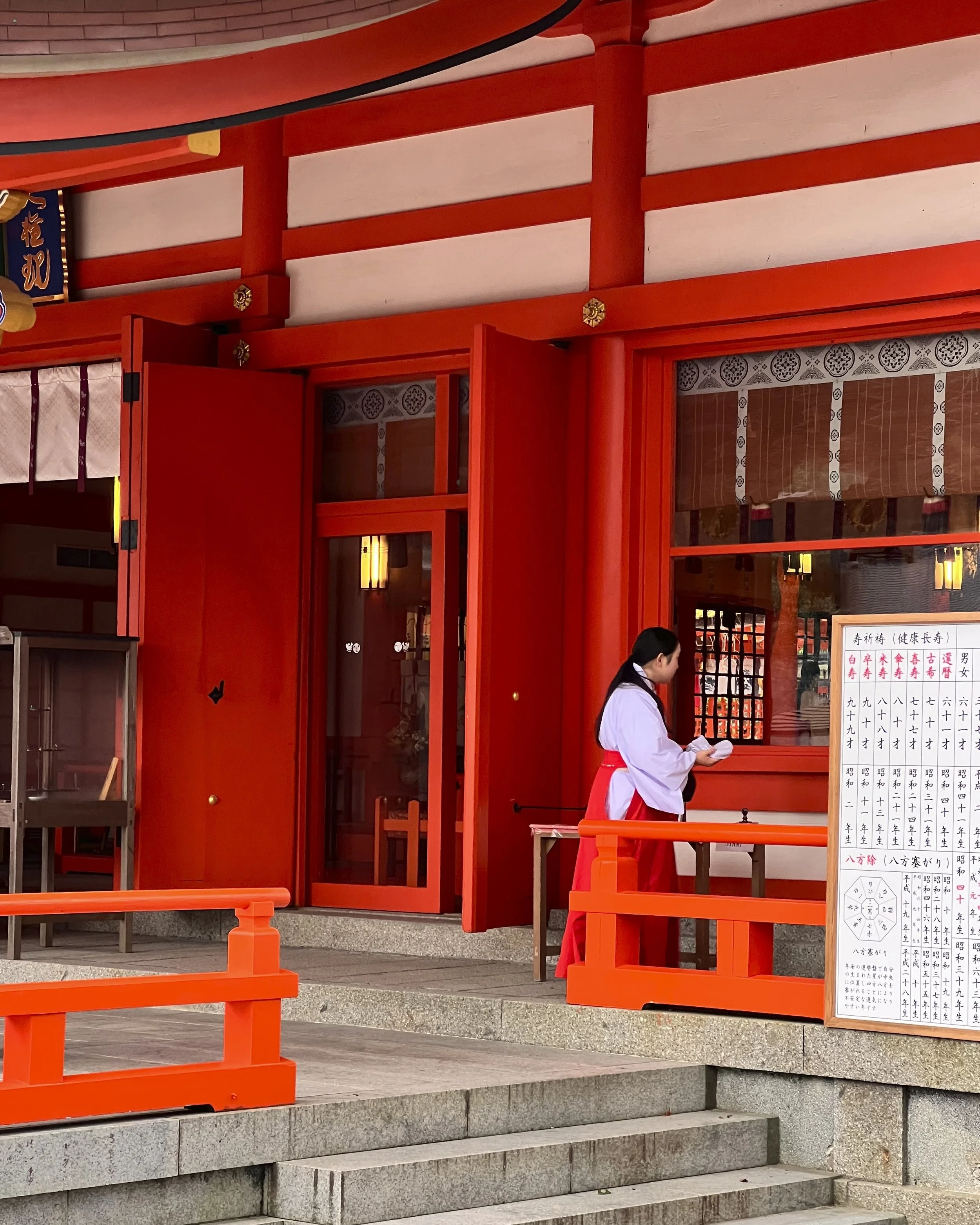
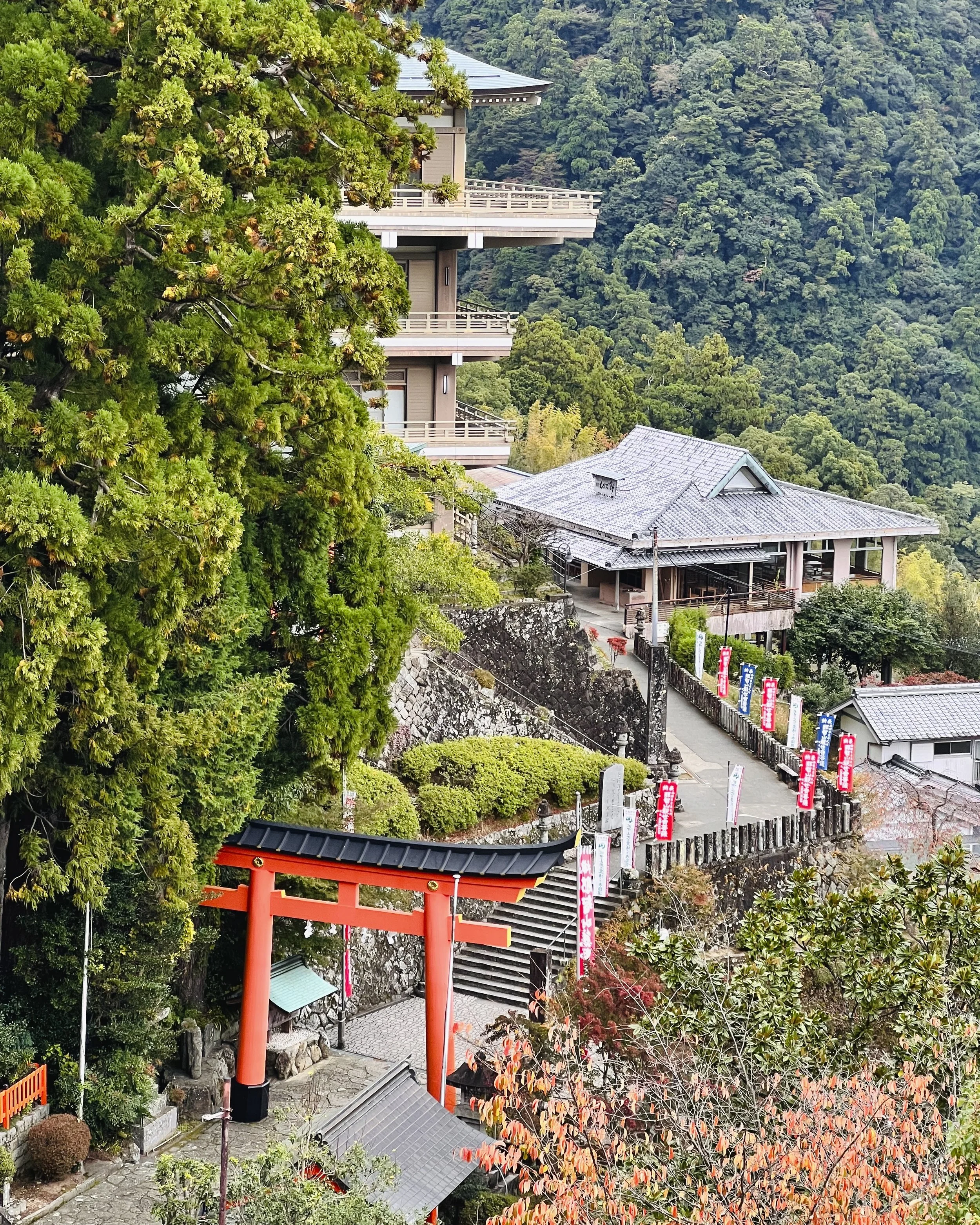
From here the trail descends steadily through Nachi Kogen Park and down the ancient stone staircase beside Seiganto-ji Temple to arrive at Kumano Nachi Taisha — the second of the great Kumano shrines, its vermillion buildings perched in the forest above the coast. A short walk below the shrine brings you to Nachi Falls — Japan's tallest waterfall at 133 metres, the thundering white curtain of water framed by the temple's three-storey pagoda in one of the most iconic views in Japan.
Day 6 — Kumano Nachi Taisha to Kumano Hayatama Taisha
The Third Shrine
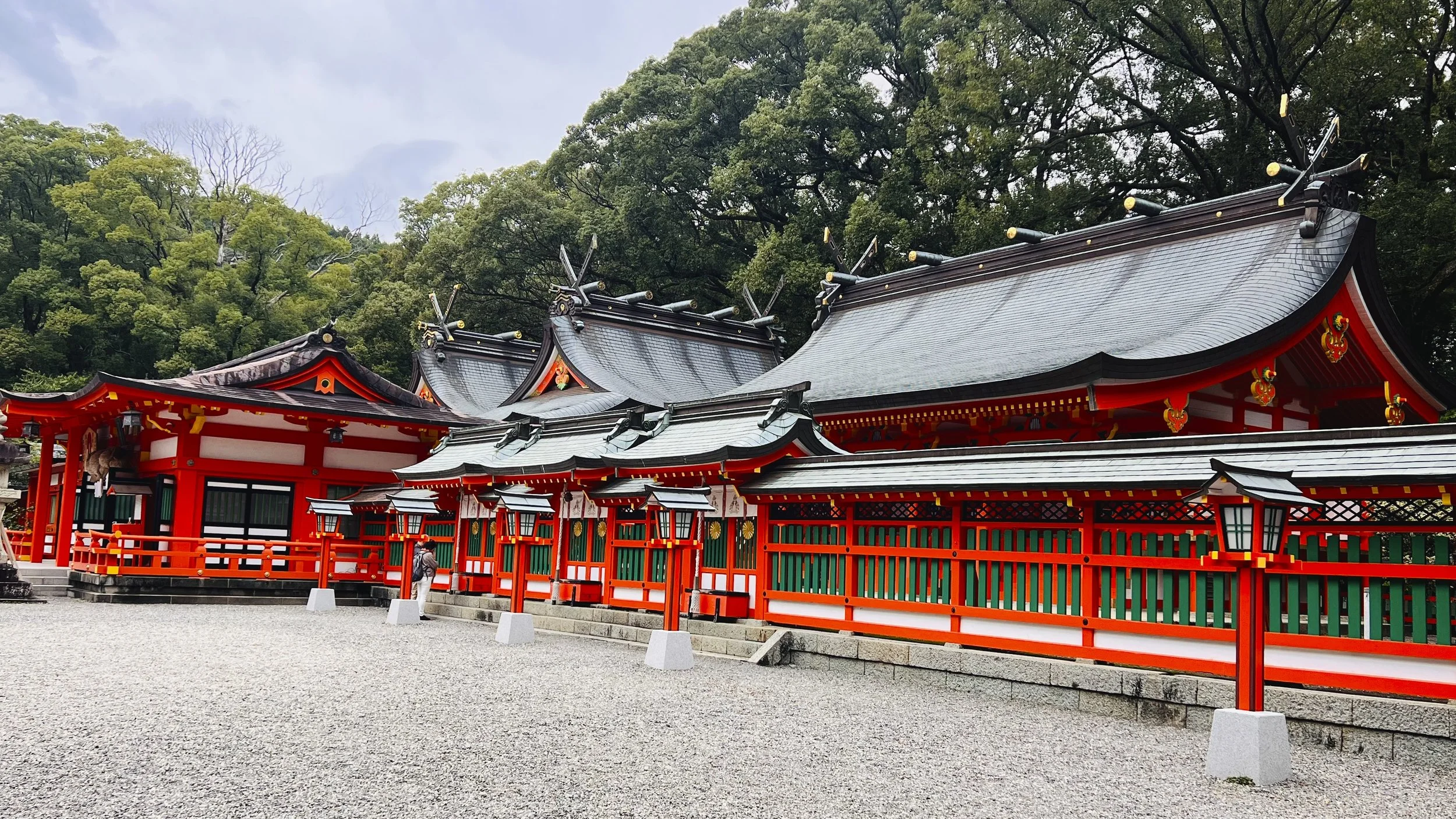
From Kii-Katsuura Station a 35-minute bus ride along the coast delivers you to Shingu and the third and final shrine of the Kumano Sanzan — Kumano Hayatama Taisha. Located at the mouth of the Kumano River where it meets the Pacific, the shrine has been a centre of worship for over a thousand years. Less visited than Hongu and Nachi, it rewards the effort with a sense of quiet and space the busier sites rarely offer.
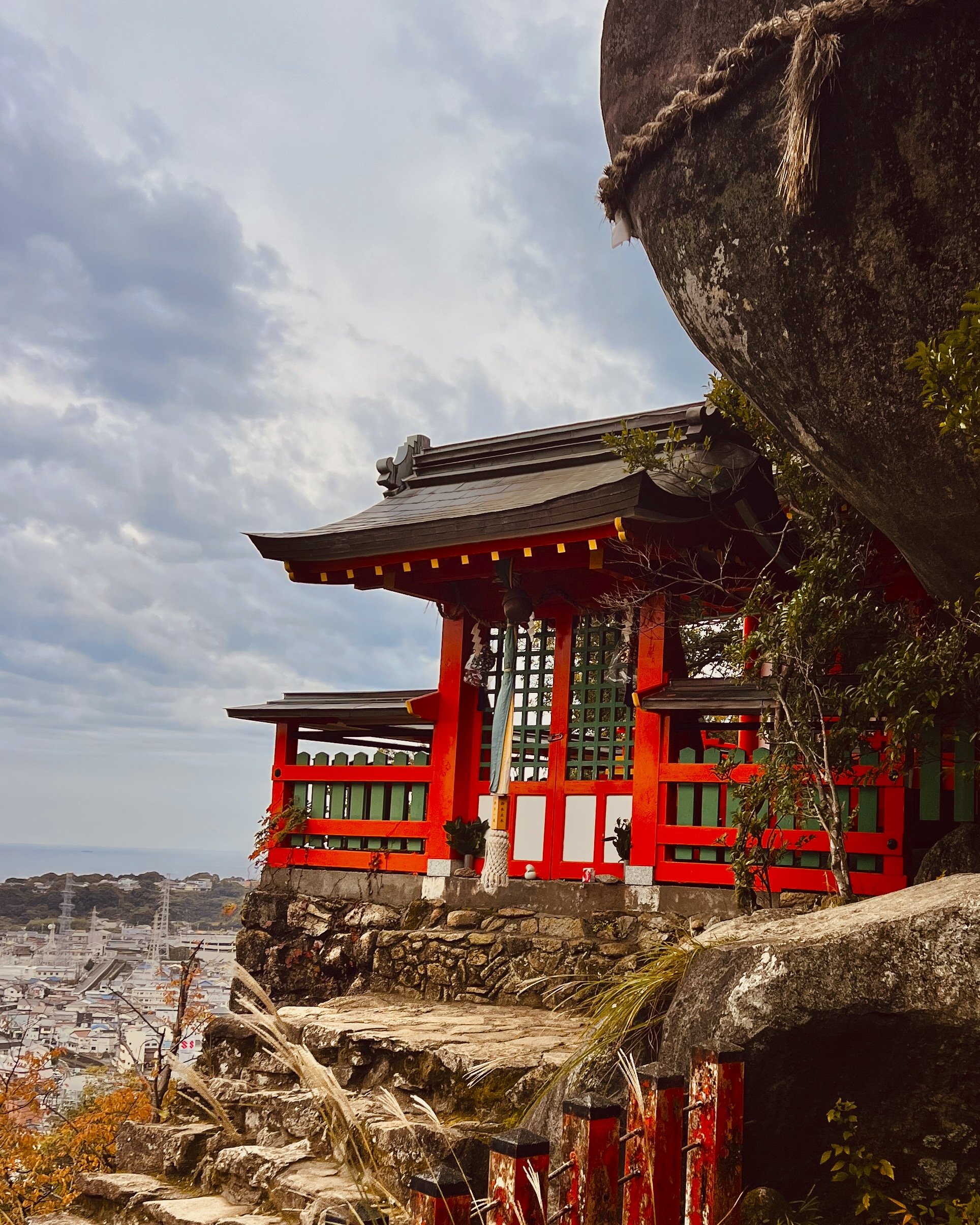
The shrine grounds shelter an ancient nagi tree estimated to be over 800 years old, considered sacred within the compound. According to ancient creation myth, the Kumano deities first descended to earth on a rock not far from the shrine — the rock itself worshipped as a sacred object ever since. Religious artifacts within the shrine's treasure hall date to the 3rd century, evidence that this site has drawn pilgrims long before the formal pilgrimage routes were established.
Completing the visit here closes the Kumano Sanzan — all three grand shrines walked and visited. The pilgrimage is done.
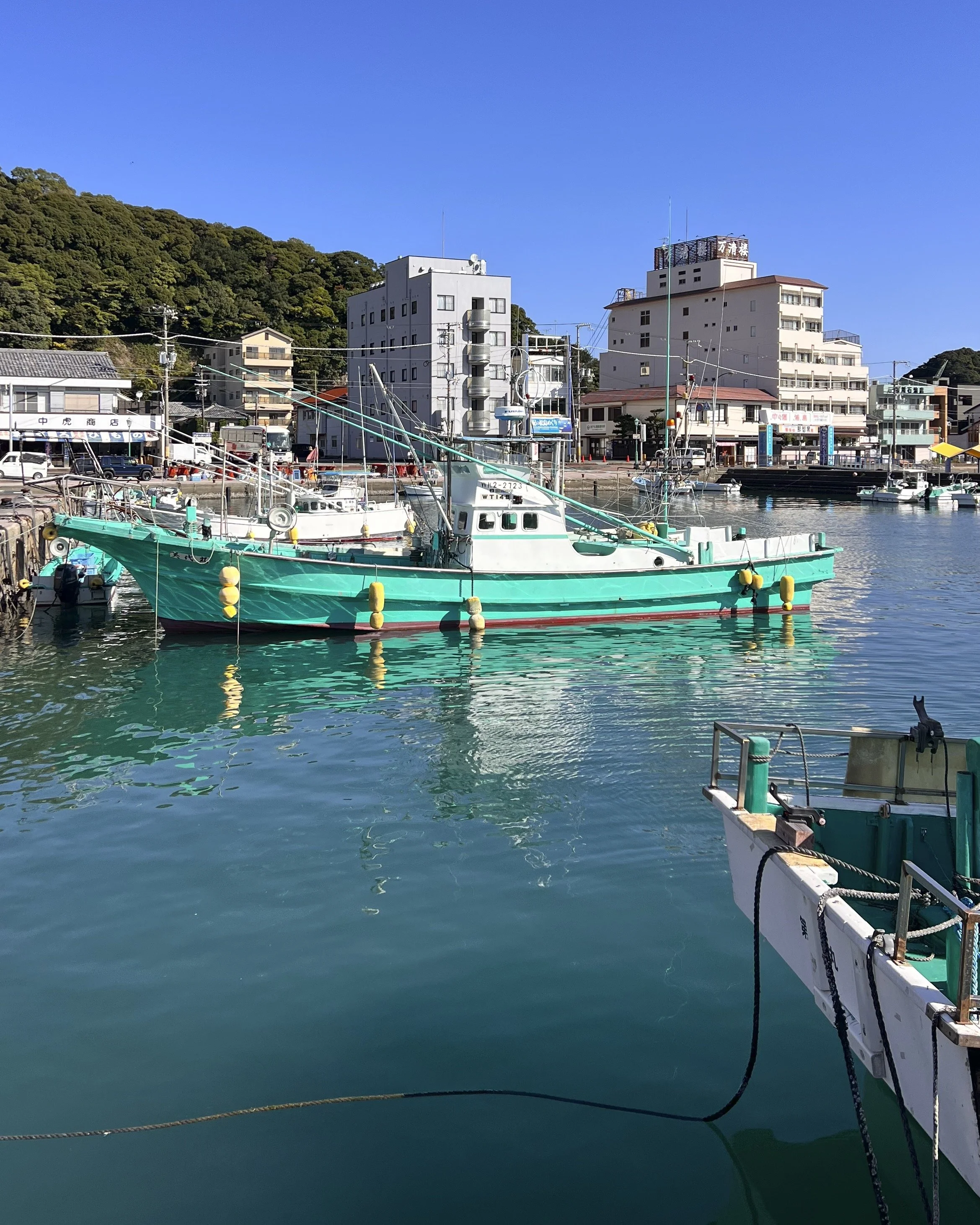
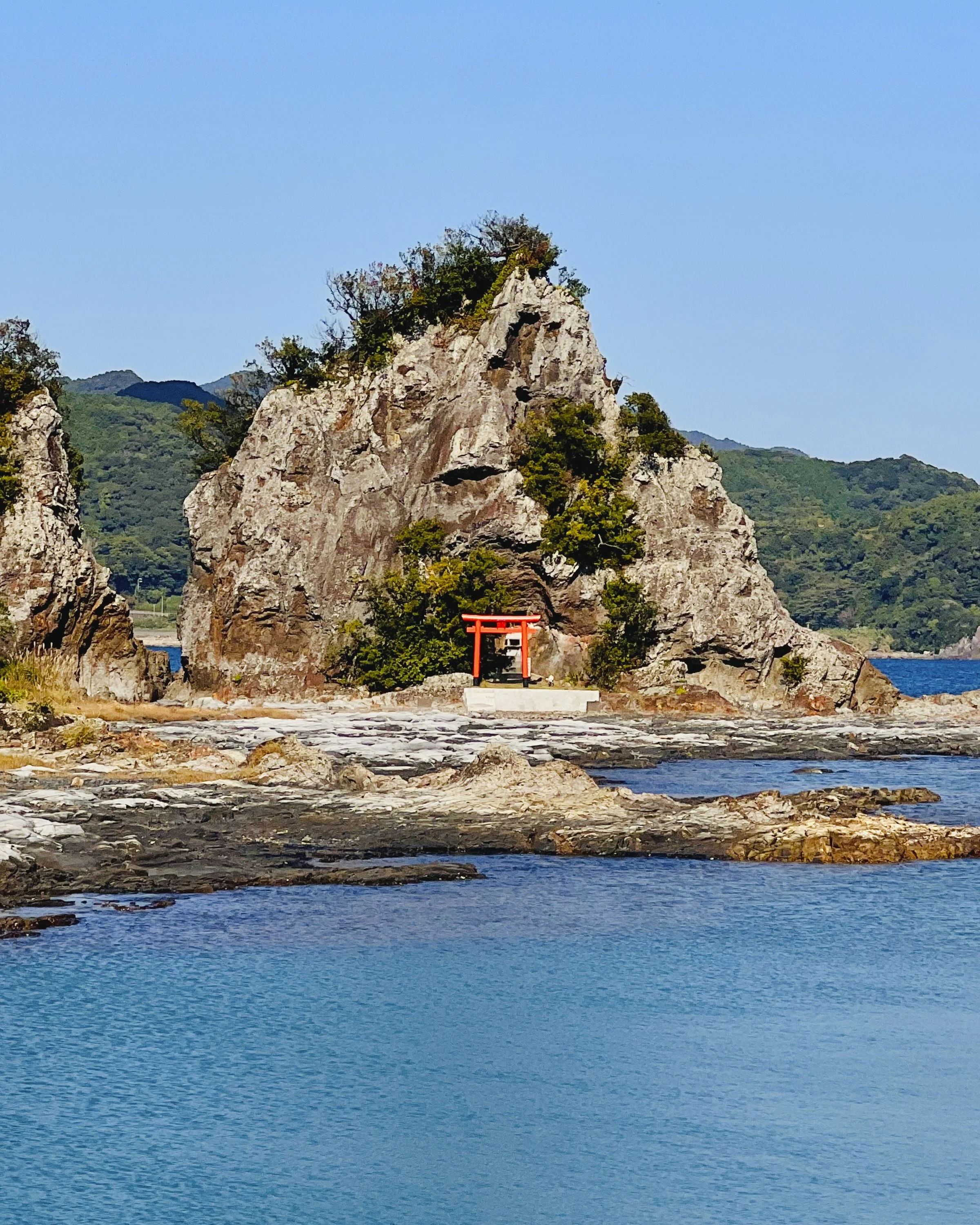
Day 7 — Kii-Katsuura | The Tuna Port, then on to Kyoto
Kii-Katsuura & Tuna
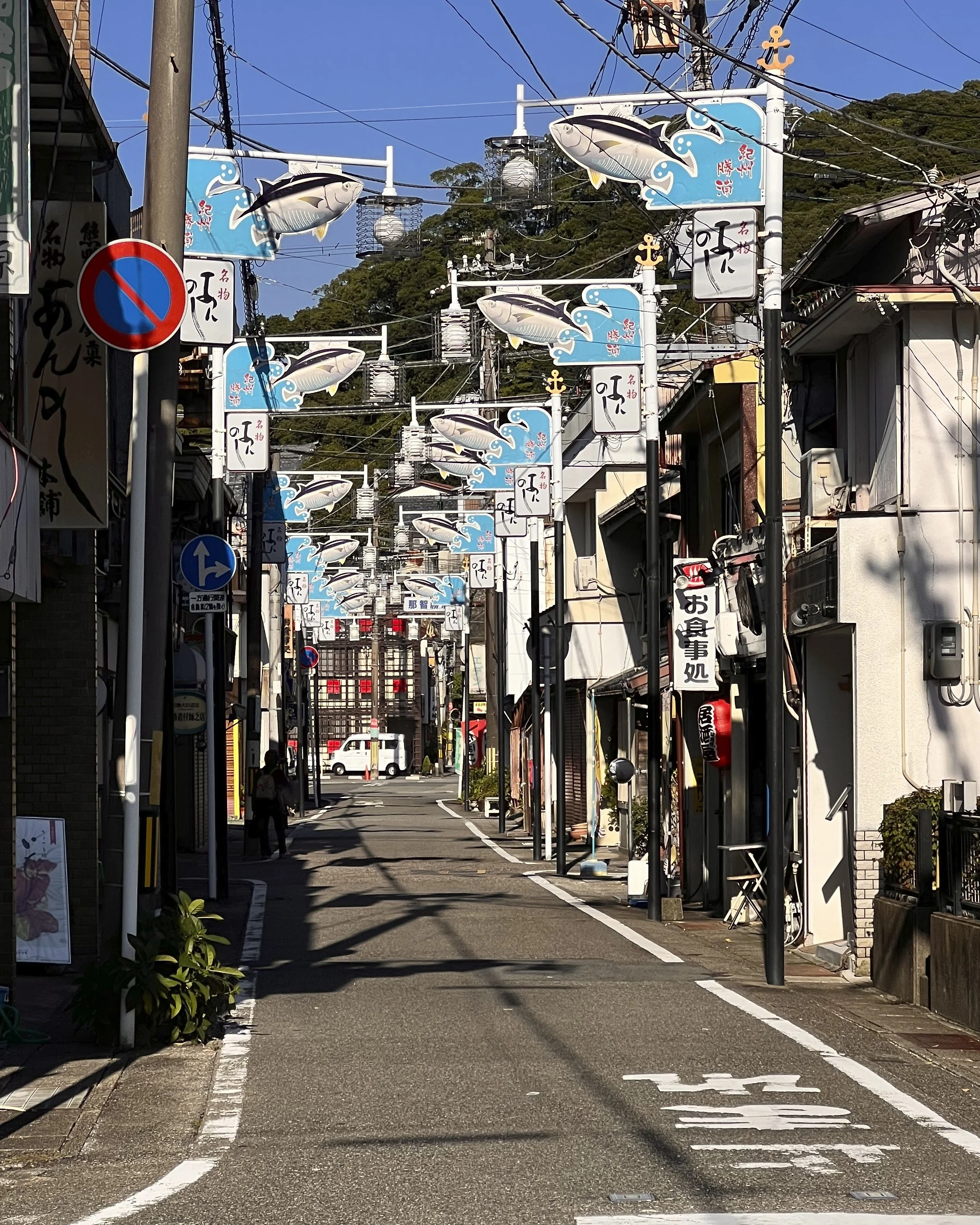
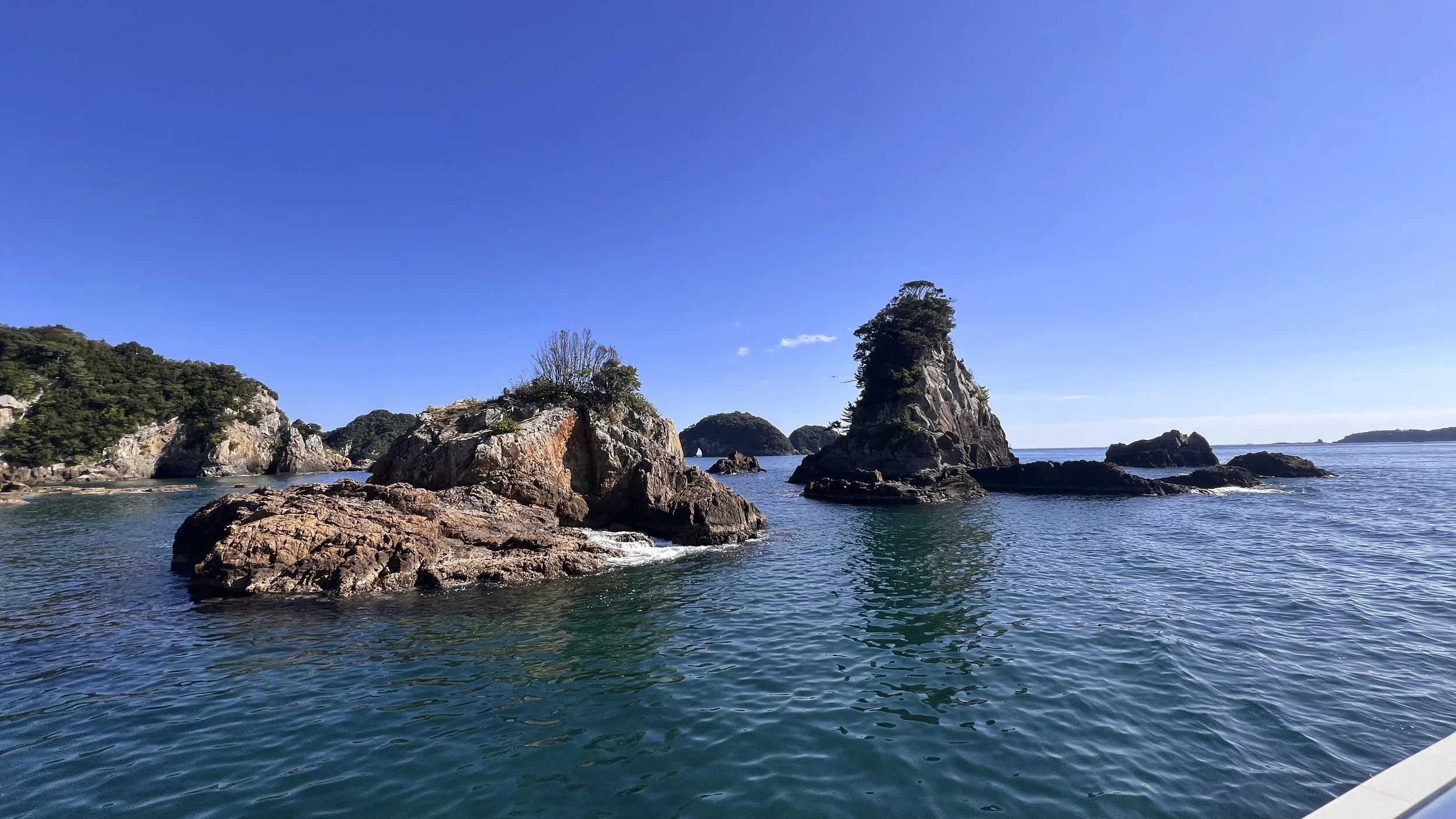
After days in the mountains, Kii-Katsuura delivers a complete change of scene — salt air, the sound of the harbour, and the smell of the sea. The port's longline fishing fleet, pushed by the warm Kuroshio Current running close to shore, lands more fresh tuna than anywhere else in Japan. The fish are dispatched immediately on board using the traditional ikejime method and stored in ice water — never frozen — giving the local tuna a distinctly firmer, more flavourful bite than anything available inland.
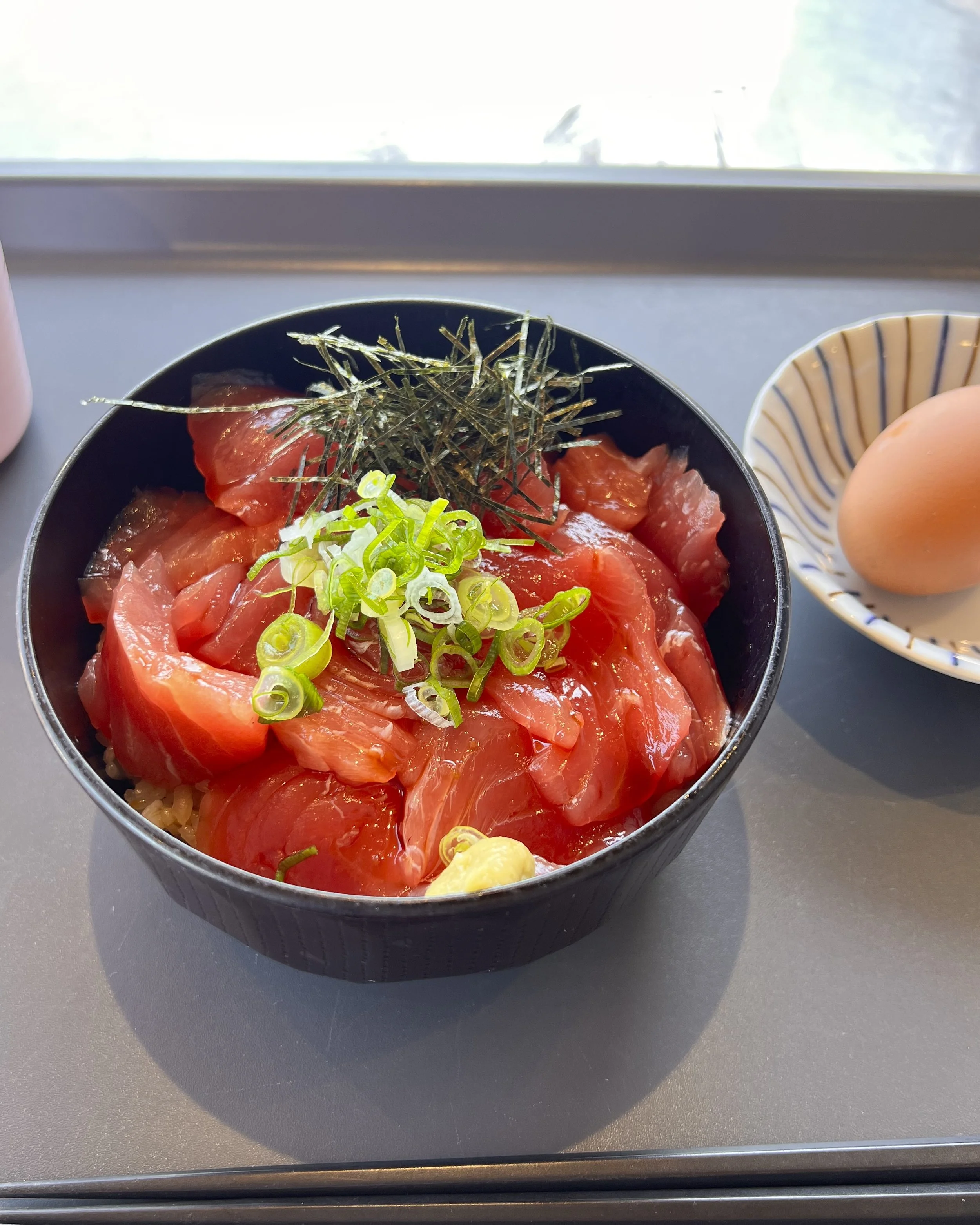
The early morning tuna auction at the fishing port is one of the genuine spectacles of the region — a fast, high-energy exchange between buyers and sellers over rows of freshly landed fish. Tours are available and worth booking in advance. The Katsuura Port Nigiwai Market nearby holds a daily tuna butchering show and is the easiest place to eat through the local catch — tuna sashimi, tuna cheek cutlet, and mochi-maguro rice bowls all feature heavily.
Beyond the port, Kii-Katsuura is a relaxed coastal onsen town without the crowds of more popular destinations — a genuine working harbour with a quiet, lived-in atmosphere. The hot springs here are excellent, with several hotels along Nachi Bay offering outdoor baths overlooking the sea.
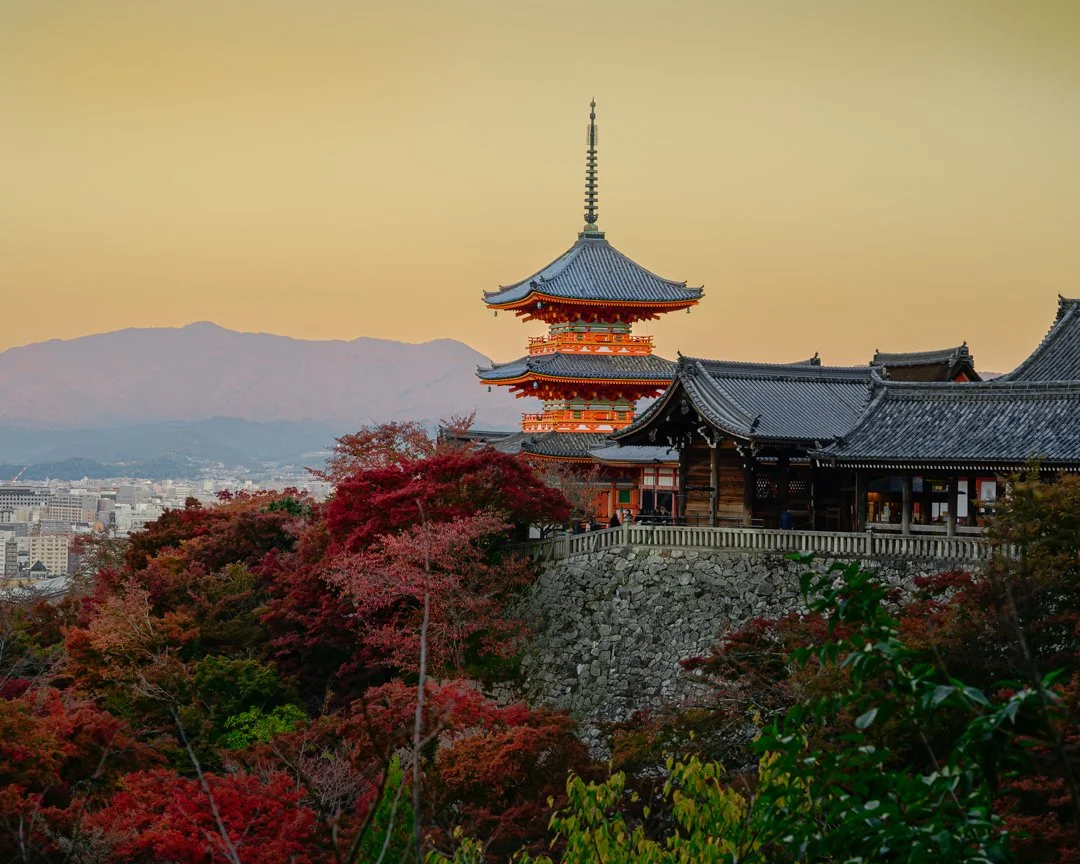
From Kii-Katsuura the journey north to Kyoto is straightforward — the JR Limited Express Kuroshio runs directly along the coast, with a travel time of around 3.5 to 4 hours. A fitting final leg through the Kii Peninsula landscape before the city closes in.